DVDneXtCOPY Blu-ray Ripper
QLED vs UHD: What’s the Difference? Crystal UHD vs QLED

Summary: UHD describes screen resolution, while QLED describes Quantum Dot display technology, so a QLED TV can also be a 4K UHD TV. For Samsung buyers, Crystal UHD is the lower-cost choice for everyday 4K viewing, while QLED adds Quantum Dot color and is generally positioned for stronger brightness and HDR performance. For gaming, compare the exact TV’s refresh rate, HDMI capabilities, VRR, ALLM, and input lag rather than choosing by the QLED or Crystal UHD label alone.
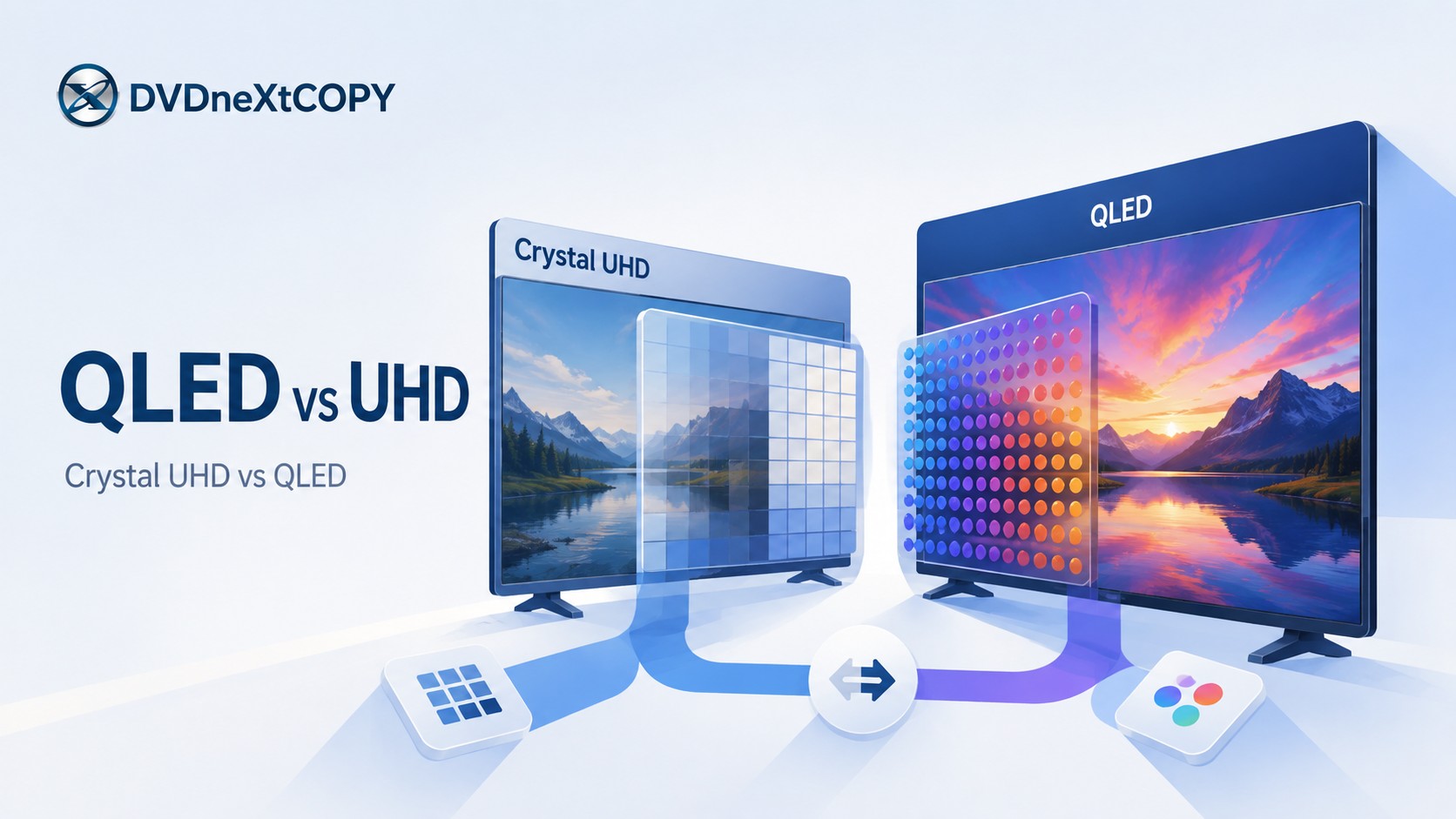
QLED and UHD do not describe competing levels of picture quality. UHD describes resolution, while QLED describes display technology that uses Quantum Dots. A QLED TV can therefore also be a 4K UHD TV.
If you are comparing Samsung TVs, Crystal UHD vs QLED is the more useful buying question. Both can have 3840 x 2160 resolution, while QLED adds Quantum Dot technology and is generally positioned above Crystal UHD for color and brightness performance. Backlight design, refresh rate, gaming features, ports, and HDR capability still depend on the exact model.
QLED vs UHD: They Describe Different Things
A resolution label tells you how many pixels the screen contains. It does not tell you which backlight, color technology, refresh rate, or local-dimming system the television uses.
What Does UHD or 4K Mean?
For consumer televisions, 4K UHD normally means 3840 x 2160 pixels. Samsung currently treats 4K TV and UHD TV as equivalent terms in its TV buying material, and that resolution contains four times as many pixels as Full HD at 1920 x 1080.
UHD by itself does not identify a Quantum Dot layer, a Mini LED backlight, a particular LCD panel type, or a specific local-dimming system. Two TVs can both be 4K UHD and still differ substantially in brightness, color, motion handling, HDR, and gaming features.
Crystal UHD is Samsung's name for a lineup of its 4K televisions. It is a Samsung product family rather than a resolution that competes with QLED.
What Does QLED Mean?
QLED televisions use Quantum Dot technology with an LED/LCD display system. Samsung places a Quantum Dot layer over the LED panel to improve color reproduction and maintain stronger color performance at higher brightness levels.
QLED does not specify resolution. Samsung sells 4K QLED televisions, and other manufacturers such as TCL also sell QLED models, so QLED should not be treated as a Samsung-only resolution category.
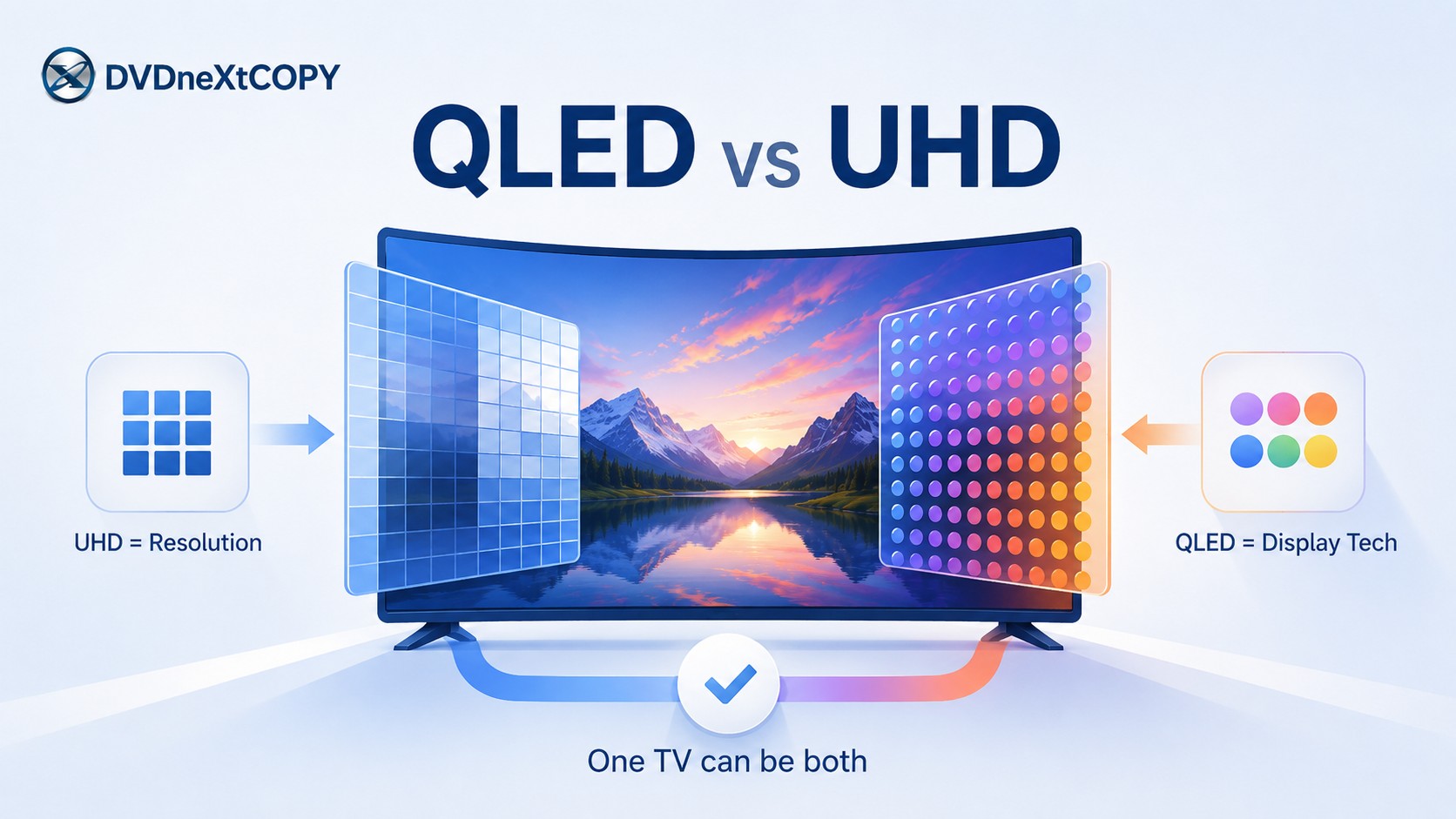
UHD tells you the screen resolution. QLED tells you that Quantum Dots are part of the display technology. One television can be both QLED and UHD at the same time.
Crystal UHD vs QLED: The Differences That Matter
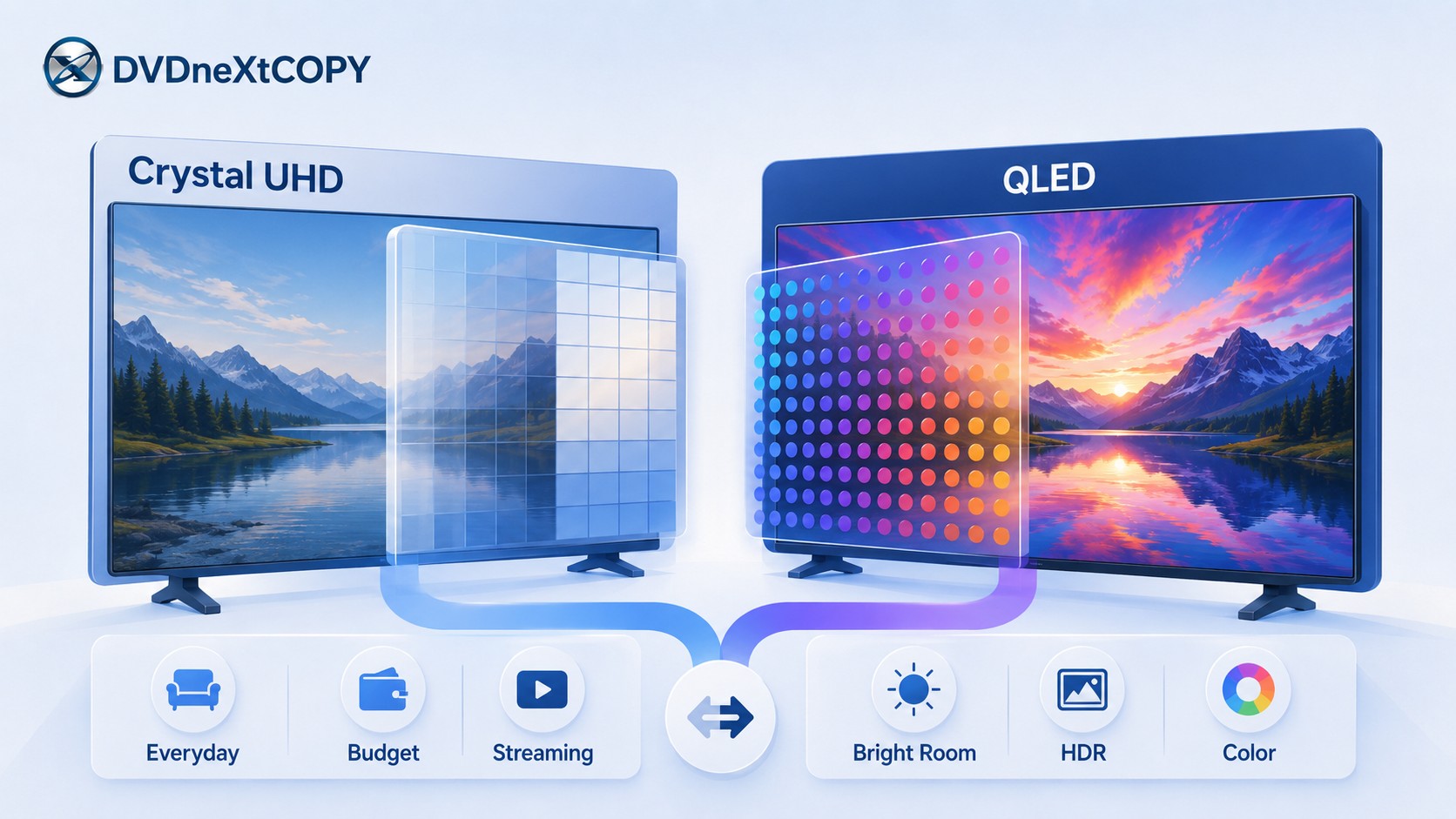
Samsung Crystal UHD and Samsung QLED are easier to compare because they are actual TV product families. Crystal UHD is Samsung's mainstream 4K range, while QLED adds Quantum Dot technology and is positioned for stronger color and brightness performance.
| Feature | Samsung Crystal UHD | Samsung QLED |
|---|---|---|
| What the name describes | Samsung 4K TV product line | Quantum Dot display technology used in Samsung's QLED TV line |
| Resolution | 4K UHD | Current Samsung 4K QLED models are also 4K UHD |
| Quantum Dots | Not the defining technology of the Crystal UHD line | Yes |
| Color and brightness | Designed for mainstream 4K viewing | Samsung generally positions QLED for stronger color and brightness performance |
| HDR | Capability varies by model | Generally positioned for stronger HDR performance; exact capability still varies by model |
| Gaming | Check the exact refresh rate, HDMI, VRR, ALLM, and input-lag specifications | Check the same specifications; the QLED label does not guarantee every gaming feature |
| Backlight | Varies by model | Varies by model; Neo QLED specifically uses Mini LED backlighting |
| Price position | Generally lower | Generally higher |
| Choose it when | Cost and everyday 4K viewing matter most | Extra brightness, Quantum Dot color, and higher-tier features justify the price |
These rows are buying guidelines rather than universal specifications. Native refresh rate, HDMI connectivity, local dimming, speaker system, processor, and gaming support can differ between models within the same TV family.
Standard QLED and Neo QLED should not be treated as the same backlight design. Samsung's Neo QLED models combine Quantum Dot technology with Mini LED backlighting, while standard QLED configurations vary by model.
Is QLED Better Than Crystal UHD?
QLED generally makes more sense when the additional brightness and Quantum Dot color are useful enough to justify a higher price. Crystal UHD is the more direct choice when the priority is getting a Samsung 4K television for everyday streaming, broadcast TV, movies, and general use at a lower cost.
Neither product-family label replaces a model-to-model comparison. Screen size, refresh rate, HDR capability, ports, backlighting, processor, and sale price can change the value of two televisions even when one belongs to the higher-tier range.
Choose QLED for Brighter Rooms, HDR, and Stronger Color Performance
Samsung's defining distinction for QLED is its Quantum Dot layer. The company positions QLED for higher brightness and stronger color performance than Crystal UHD, which can matter in bright rooms and with HDR movies, sports, and games.
The size of that improvement depends on the models being compared. A QLED badge does not by itself tell you the peak brightness, local-dimming performance, black level, or native refresh rate.
Choose Crystal UHD for Everyday 4K Viewing and Lower Cost
Crystal UHD makes sense when you mainly want a current Samsung 4K television without paying for the additional Quantum Dot positioning of QLED. It can provide the same fundamental 3840 x 2160 resolution as a 4K QLED.
Buying QLED does not give you a higher 4K resolution. The extra cost goes toward differences elsewhere in the display and feature set, so compare the actual models when deciding whether those differences matter in your room.
Crystal UHD vs QLED for Gaming
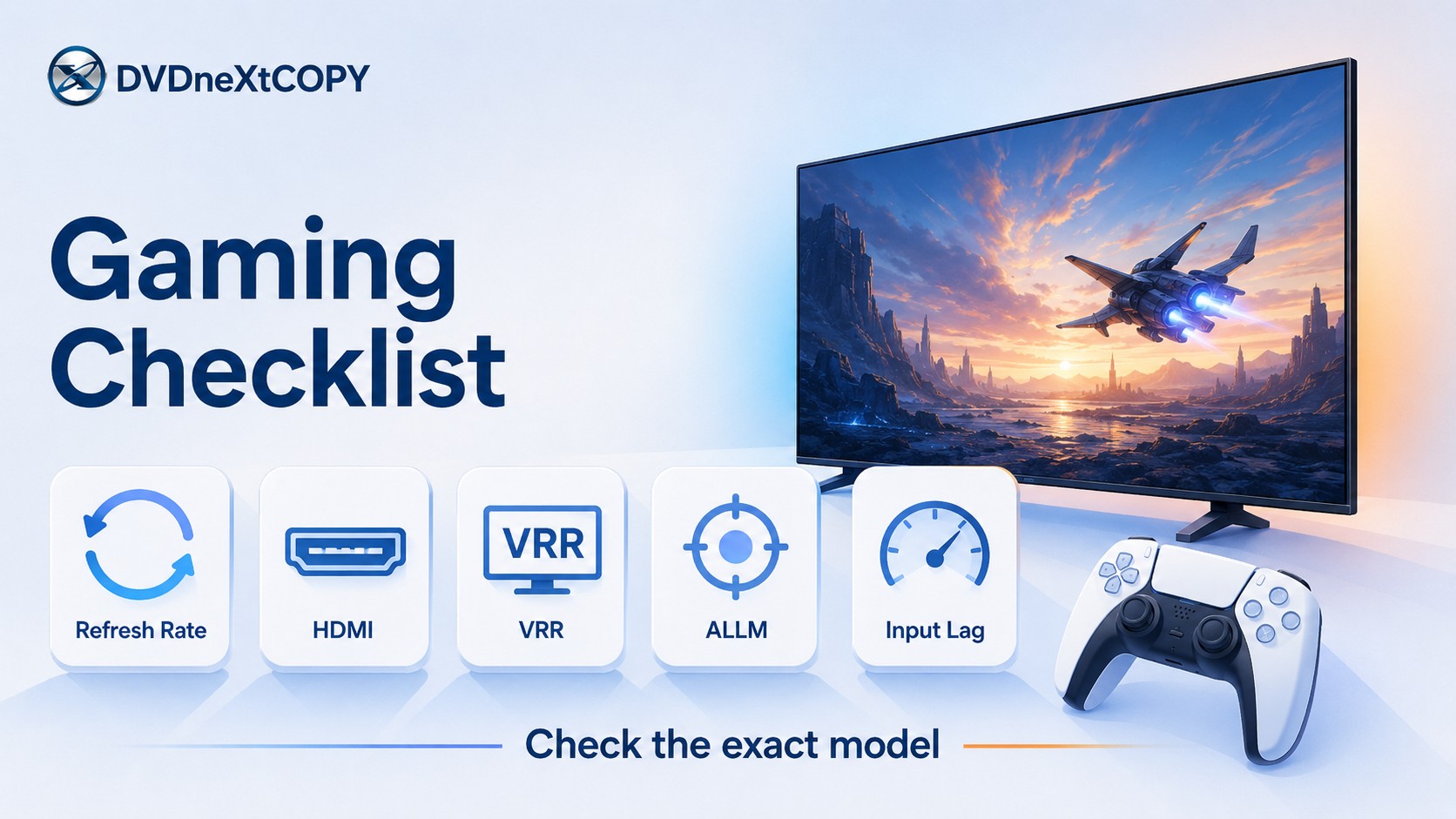
Do not choose a gaming TV from the QLED or Crystal UHD badge alone. Compare the exact model's native refresh rate, HDMI capabilities, Variable Refresh Rate support, Auto Low Latency Mode, and input lag.
Samsung identifies high refresh rates such as 120Hz, HDMI 2.1, VRR, ALLM, low input lag, and 4K resolution as important gaming-TV features. Different models offer different combinations of these specifications, so the product-family name does not guarantee them.
Check Refresh Rate, HDMI, VRR, and ALLM
Refresh rate tells you how often the panel redraws the image each second. A native 120Hz television can display high-frame-rate console or PC games more smoothly than a 60Hz display when the game and connected hardware support the higher frame rate.
For a PlayStation, Xbox, or gaming PC that can output high-frame-rate 4K video, check whether the specific HDMI port supports the refresh rate and features you need. VRR helps the television follow a changing game frame rate, while ALLM lets compatible equipment switch the TV into a low-latency mode automatically.
If two TVs are both 4K, the better gaming model is the one whose refresh rate, HDMI ports, VRR, ALLM, and input lag match your console or PC. QLED is not a substitute for checking those specifications.
QLED, UHD, 4K, and LED Explained Together
4K / UHD describes resolution. In mainstream consumer TV terminology, that normally means 3840 x 2160 pixels.
LED TV usually refers to an LCD television illuminated by LED backlighting. It is a broad hardware category rather than a resolution, so an LED TV can have different resolutions depending on the model.
QLED belongs to the LED/LCD family but adds Quantum Dot technology for color reproduction. A QLED television can also have 4K UHD resolution.
Crystal UHD is Samsung's name for a lineup of its 4K televisions, while Neo QLED combines Samsung's Quantum Dot technology with Mini LED backlighting.
- 4K UHD: tells you the resolution.
- QLED: tells you Quantum Dots are part of the display technology.
- Crystal UHD: tells you which Samsung 4K product family the television belongs to.
- Neo QLED: identifies Samsung's Quantum Dot line that uses Mini LED backlighting.
FAQs
Yes, it can be. QLED describes Quantum Dot display technology, while UHD or 4K describes resolution. A QLED television can therefore have 4K UHD resolution.
Neither is automatically better for every buyer. Crystal UHD generally costs less and covers everyday 4K viewing, while Samsung QLED adds Quantum Dot technology and is positioned for stronger brightness and color performance.
Compare the exact models rather than the product-family names. Check native refresh rate, 4K/120Hz support if your console or PC needs it, HDMI capability, VRR, ALLM, and input lag.
In mainstream consumer TV shopping, UHD and 4K are commonly used for the same 3840 x 2160 resolution. UHD is a resolution term rather than a particular display technology.
A conventional LED TV uses an LCD panel with LED-based illumination. QLED belongs to the same broad LCD/LED family but adds Quantum Dot technology to improve color reproduction.
Conclusion
If you are choosing between Samsung TVs, compare Crystal UHD vs QLED rather than treating UHD resolution and QLED as competing technologies. Choose Crystal UHD when lower cost and everyday 4K viewing are the priority; consider QLED when the added Quantum Dot color and brightness are useful enough to justify the price.
For gaming, check the exact model's refresh rate, HDMI capabilities, VRR, ALLM, and input lag before deciding.