 DVDneXtCOPY Blu-ray Creator
Blu-ray Authoring Software for Windows and Mac: 2026 Picks by Project

Summary: Compare six active Blu-ray authoring tools by operating system, menu controls, disc output, and project tier. The guide separates home authoring from BD-J mastering and standard Blu-ray from 4K UHD, then closes with a modern compatibility checklist and four focused FAQs.
Start a Blu-ray authoring software search with three checks: project tier, operating system, and disc standard. A home Blu-ray menu creator does not replace professional BD-J or 4K UHD tools. The comparison below makes the Windows, Mac, standard Blu-ray, and UHD differences clear.
If you need a playable 1080p disc with menus, start in the consumer tier. If a client requires BD-J, replication delivery, or UHD/HDR output, start with software built for that production requirement.
Best Blu-ray Authoring Software at a Glance
The best Blu-ray authoring software is the one that matches your operating system, menu needs, output type, and delivery standard. These six products remain active, but they serve different levels of authoring work.
| Software | OS and status | Menus and tracks | Output and disc standard | License tier |
|---|---|---|---|---|
| DVDneXtCOPY Blu-ray Creator | Windows 11/10/8.1/8/7 | Menus, chapters, audio, subtitles, preview | BD-5/9/25/50; disc, ISO, folder; 720p/1080p | 30-day trial; up to 3 Blu-rays |
| Blu-Disc Studio | Windows; version 4.7.2 | BD-J menus, audio, subtitles, Java controls | BD-J/CMF; professional mastering | Commercial professional license |
| CyberLink Power2Go 13 | Windows; Power2Go 13 page active | Movie-disc menus and background audio | CD/DVD/Blu-ray; standard disc tasks | Commercial suite; edition-based trial |
| DVDFab Blu-ray Creator | Windows and macOS | Static/dynamic menus; tracks and subtitles | Standard disc, ISO, folder; separate UHD product | 30-day trial; up to 3 Blu-rays |
| Roxio Toast 20 Pro | macOS Sonoma; Apple Silicon supported | Custom menus; media suite tools | Standard Blu-ray through supported Toast components | Commercial suite |
| Express Burn | Windows and macOS; active version line | Multi-page Blu-ray menus in 14.05 | Standard Blu-ray; UHD process not published | Edition-based licensing |
Vendor status and version details: each listed tool's official product page, as of September 2026.
DVDneXtCOPY and DVDFab serve standard consumer authoring, while Blu-Disc Studio targets BD-J delivery. Toast and Express Burn narrow the Mac choices. Skip consumer software when a replication facility requests professional master formats.
Choose by Project, Budget, and Output
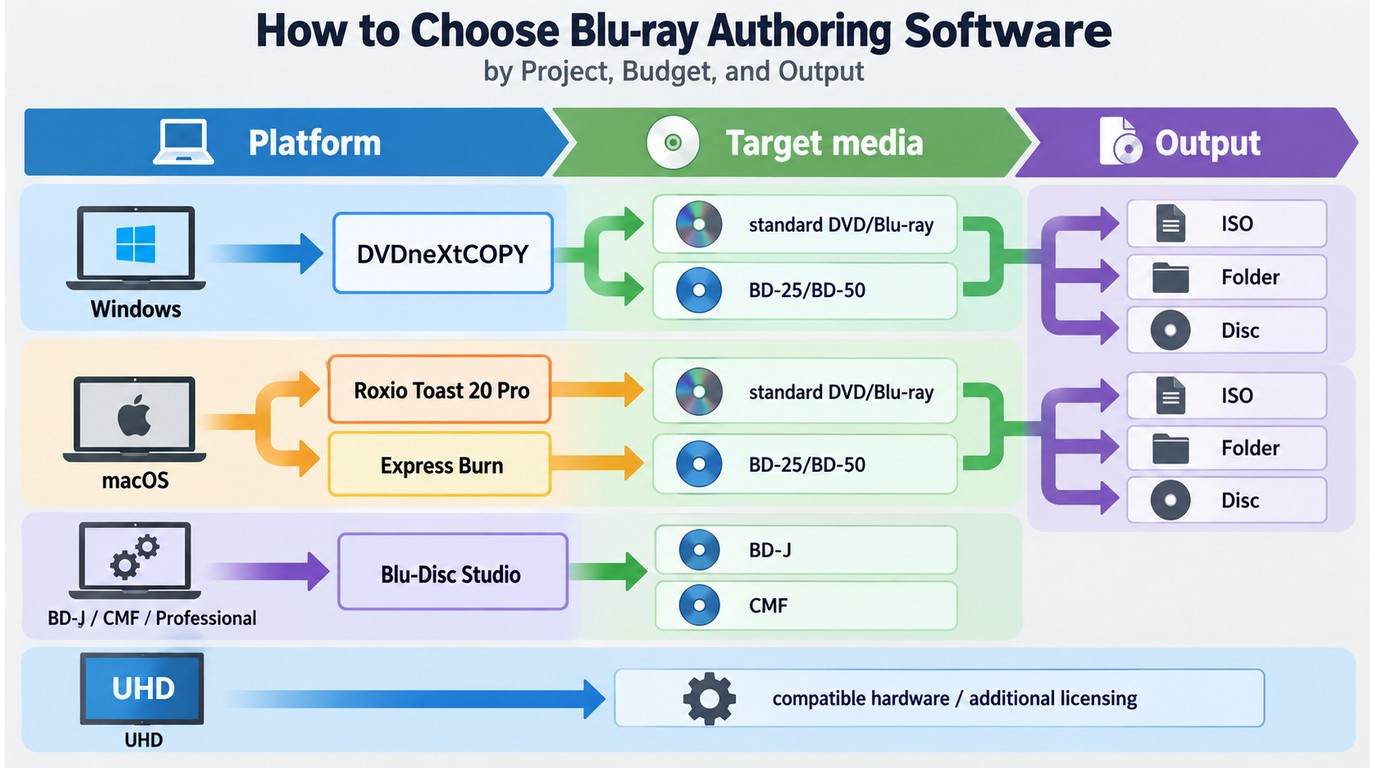
Choose the software from the output backward: disc or ISO, standard Blu-ray or UHD, then menus and track control. A Blu-ray maker that hides disc capacity or platform support creates expensive rework later.
- Operating system: Match the exact Windows or macOS version and, on Mac, the Intel or Apple Silicon architecture.
- Authoring controls: Look for the menu, chapter, subtitle, audio-track, and preview controls your finished disc needs.
- Output: Decide whether you need a writable disc, ISO image, Blu-ray folder, professional master, or UHD deliverable.
- Capacity: Standard projects commonly use BD-25 or BD-50; UHD work moves into BD-66 or BD-100 requirements.
- License: A free tier suits a short home project; recurring client delivery needs supported commercial software.
Authoring builds navigation and disc structure, while burning writes prepared data to media, so the Blu-ray Burning Software comparison is the narrower match when your files are already authored.
Find the Right Tier for Your Project
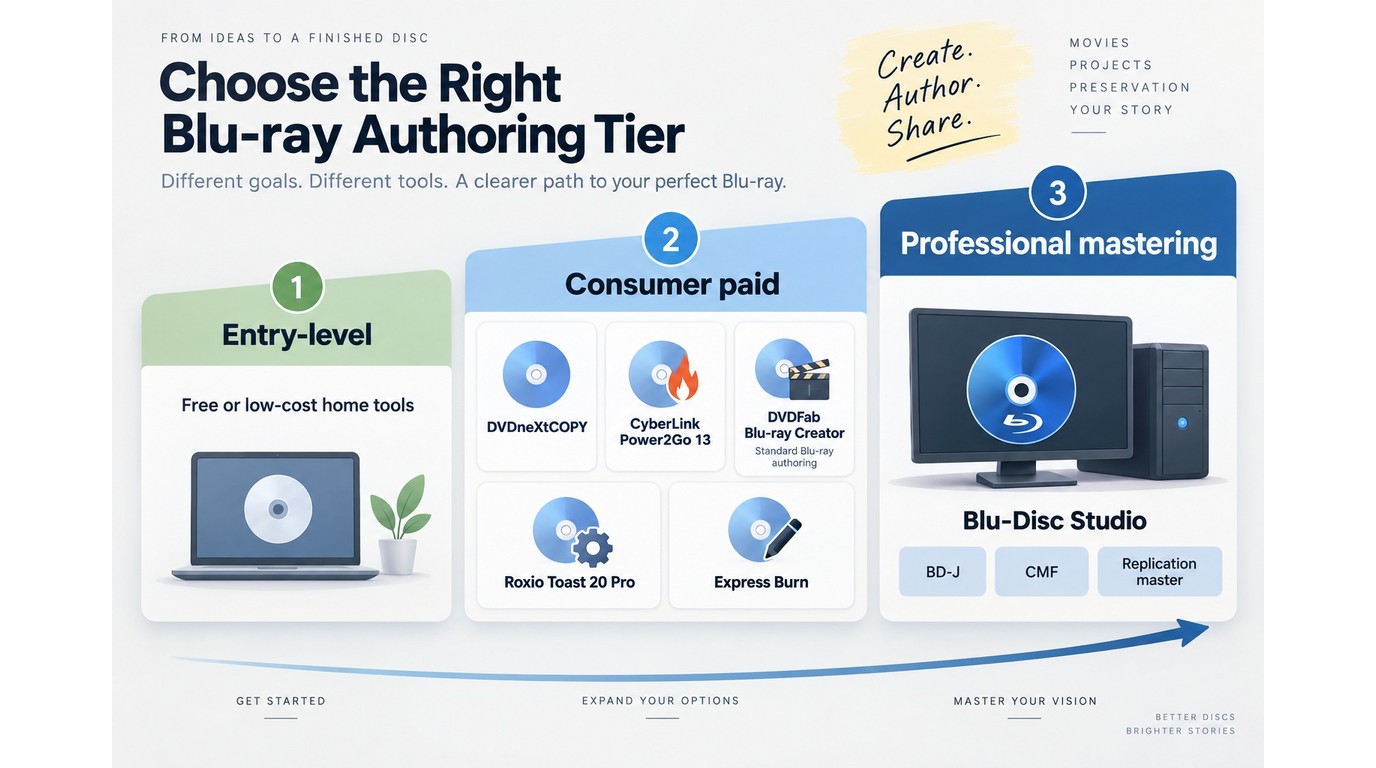
Project tier changes the recommendation more than a long feature list. Free tools serve basic home discs, paid consumer apps add guided menus and previews, and professional systems address BD-J, mastering, and replication delivery.
- Free or low-cost home tier: Free Blu-ray authoring software can cover a basic standard-disc project. It is not a substitute for licensed UHD work, complex Java menus, or a replication master.
- Consumer paid tier: DVDneXtCOPY, Power2Go, DVDFab, Toast, and Express Burn suit personal videos, portfolios, and standard client discs. Choose this tier when visible menus, chapters, previews, and ISO output matter.
- Professional tier: Professional Blu-ray authoring software such as Blu-Disc Studio serves BD-J interaction and mastering handoffs. It brings a steeper learning curve and is excessive for a simple home disc.
I would not send a free home-authoring project to replication. Once a client specifies BD-J, CMF, copy protection licensing, or a facility-approved master, use the professional tier from the start.
Blu-ray Authoring Software for Windows
Windows offers consumer Blu-ray creator software and professional BD-J systems. I would start with DVDneXtCOPY for a standard personal project, then move to Blu-Disc Studio only when the delivery specification calls for professional mastering controls.
DVDneXtCOPY Blu-ray Creator
DVDneXtCOPY Blu-ray Creator is Windows Blu-ray creator software for standard 720p/1080p projects. It accepts 200+ video formats and outputs BD-5, BD-9, BD-25, or BD-50 discs, ISO files, and Blu-ray folders.
For content you're authorized to access, the ISO or folder option lets you save a local copy for personal offline viewing before writing a disc.
Pros:
- Imports MP4, MKV, AVI, MOV, WMV, FLV, M4V, MPEG, and 200+ formats
- Creates Blu-ray discs, ISO files, or folders in BD-5, BD-9, BD-25, and BD-50 sizes
- Adds static or dynamic menus with editable titles, backgrounds, buttons, and thumbnails
- Lets you set chapters and select subtitles and audio tracks
- Supports GPU acceleration on compatible Windows hardware
- Previews video content and menu behavior before writing
- Uses a clear Creator mode with visible output controls
Cons:
- The product supports Windows, not macOS or Linux.
How to Use DVDneXtCOPY Blu-ray Creator to Create Standard Blu-rays:
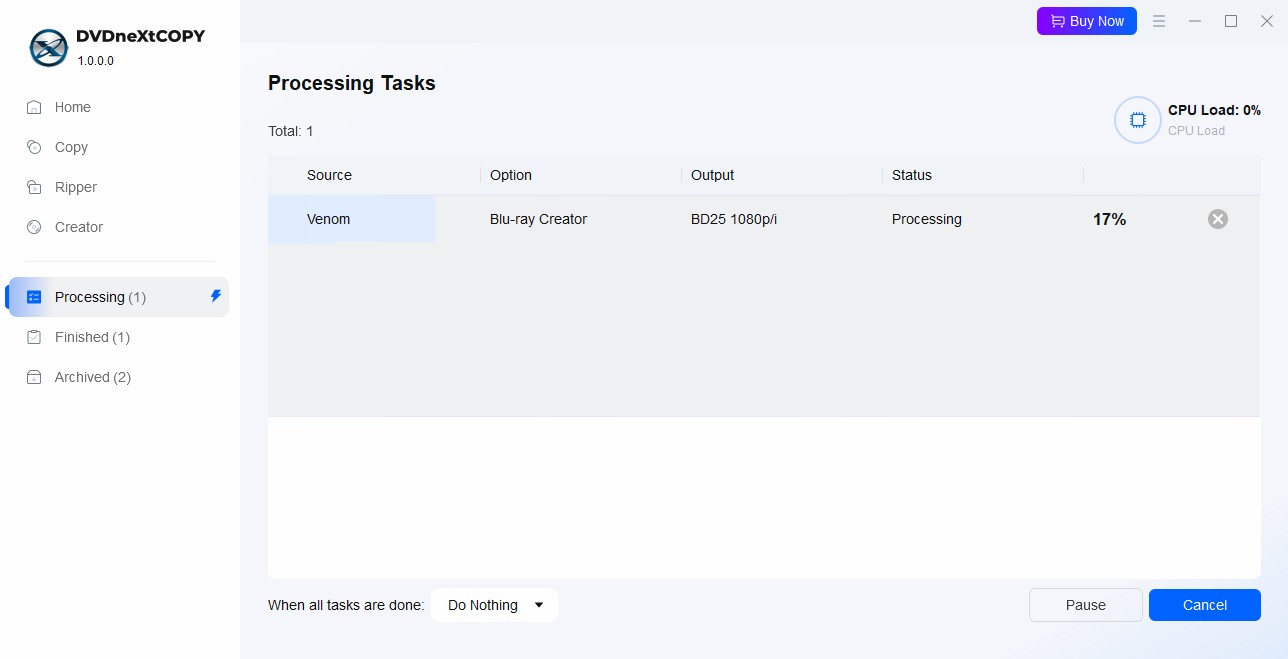
Step 1: Install DVDneXtCOPY, open the Creator module, select Blu-ray Creator, and load the source with the Add button or drag-and-drop area. The video should appear in the project list.
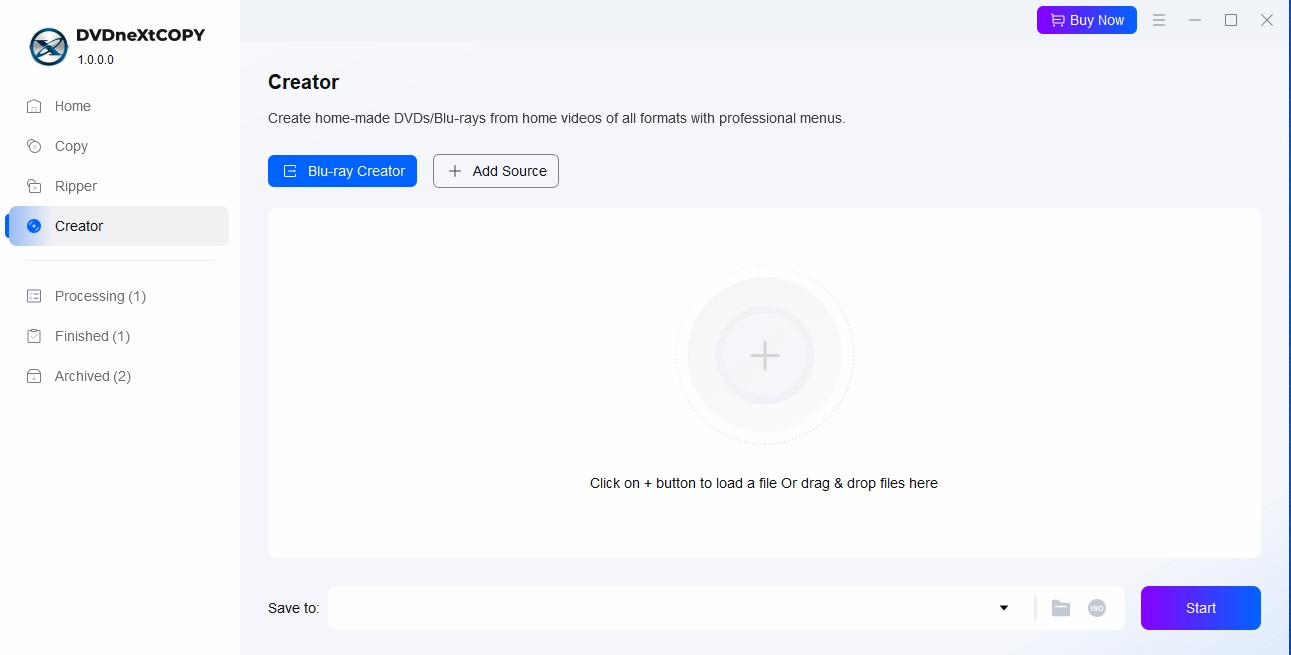
Step 2: Select the audio track and subtitles, then open Advanced Settings. Choose BD-5, BD-9, BD-25, or BD-50 to match the intended output capacity.

Step 3: Open Menu Settings, choose a static or dynamic template, and edit the title, background, buttons, and chapter thumbnails. Use Preview to check navigation before writing.
Step 4: Select a Blu-ray writer, ISO file, or folder as the destination. Insert compatible blank media for disc output, then select Start and monitor the progress indicator.
Blu-Disc Studio

Blu-Disc Studio is professional Blu-ray authoring software for Windows projects that need BD-J interaction or a CMF handoff. Its official site lists version 4.7.2, released February 1, 2026. The deeper control set suits trained authors more than first-time disc makers.
Pros:
- Targets BD-J authoring for professional Blu-ray projects
- Supports CMF output for mastering handoffs
- Gives trained authors deeper control than a consumer menu editor
- Suits projects with a defined professional delivery specification
- Keeps advanced authoring tasks inside a current Windows product line
Cons:
- The professional controls require more setup and training than a consumer menu editor.
- It is excessive for a short home project that needs a simple title menu and standard disc output.
CyberLink Power2Go 13

CyberLink Power2Go 13 is a Windows disc suite with movie-disc menus, data burning, backup, and media utilities. CyberLink still maintains a Power2Go 13 product and support path, but the available authoring features follow the installed edition.
Pros:
- Maintains an official Power2Go 13 feature and support path
- Places several Windows disc tasks in one commercial suite
- Requires the installed edition to match the intended Blu-ray task
- Suits Windows users who also need general disc utilities
- Keeps project selection tied to edition-specific features
Cons:
- Power2Go 13 supports Windows, not macOS or Linux.
- The broad utility suite is more software than a menu-focused authoring project needs.
DVDFab Blu-ray Creator
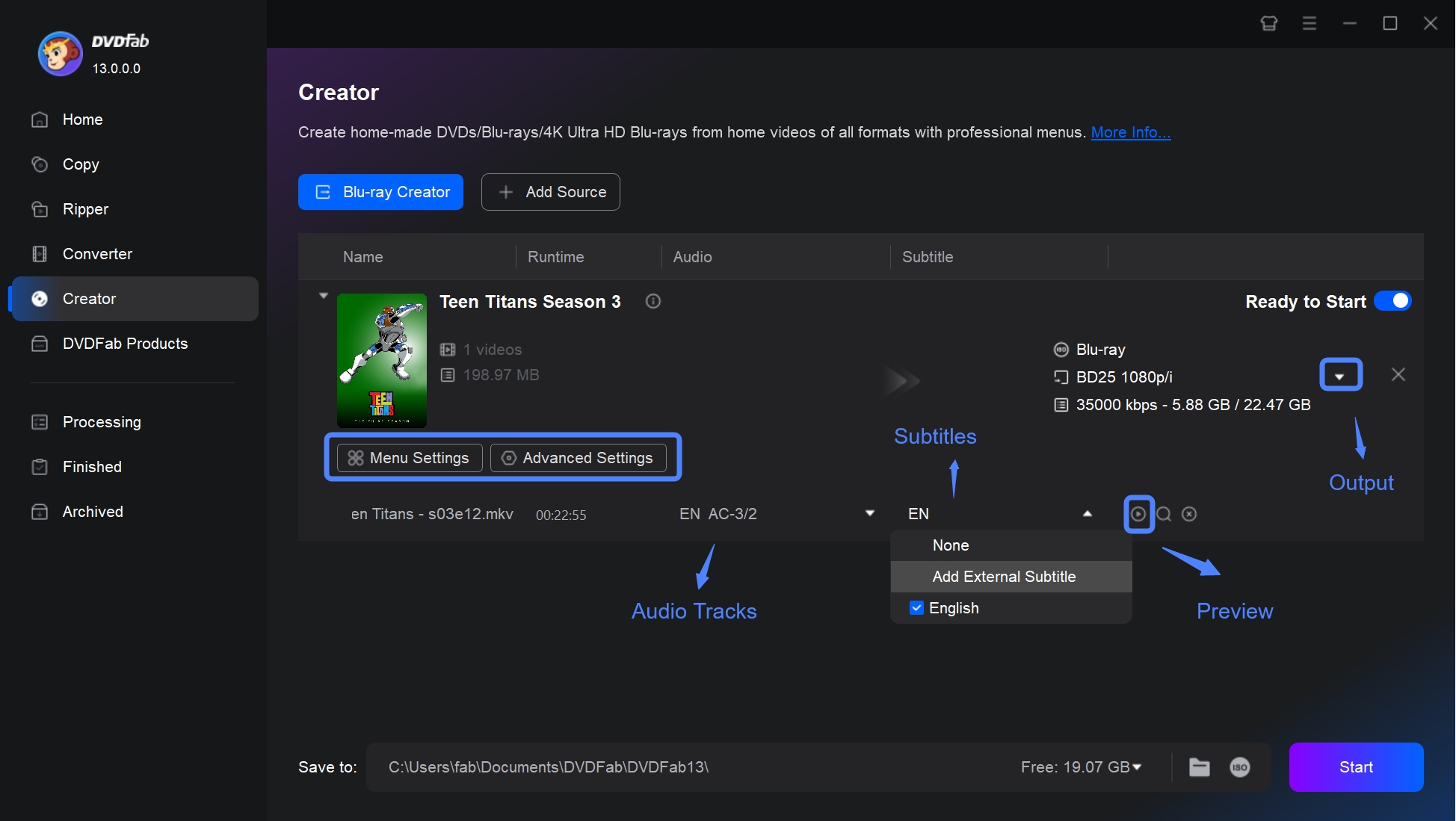
DVDFab Blu-ray Creator is a simple, quick, and versatile Blu-ray authoring software program that helps you create standard Blu-rays for playback on home players. You can quickly burn videos in over 200 formats from smartphones, HD camcorders, SD cards, or other devices. DVDFab Blu-ray Creator lets you create a personalized Blu-ray menu with customized and stylish template options.
Pros:
- Creates standard Blu-ray discs, ISO files, and folders from common video files
- Accepts videos from cameras, phones, and local storage
- Builds standard Blu-ray projects for compatible home-player playback
- Includes static and dynamic menu templates
- Edits menu backgrounds, text, buttons, and thumbnail layouts
- Displays source metadata in supported menu layouts
- Supports GPU-accelerated batch creation on compatible hardware
Cons:
- Linux is not supported.
- 4K UHD authoring belongs to a separate DVDFab product and production process.
The Windows group spans three distinct needs: standard personal authoring, broad disc utilities, and professional BD-J delivery. Choose DVDneXtCOPY for authorized standard projects, Power2Go for a wider disc suite, and Blu-Disc Studio for a professional handoff.
Blu-ray Authoring Software for Mac
Mac choices are narrower and must be matched to the installed macOS version and processor. I would start with Toast on a supported Apple Silicon Mac; Express Burn is the lighter choice for standard disc writing and simpler menus.
Roxio Toast 20 Pro

Roxio Toast 20 Pro is a macOS media and disc suite. Roxio lists macOS Sonoma and Apple Silicon support for Toast 20, which makes it the clearer Mac option in this group when the installed edition includes the Blu-ray features your project needs.
Pros:
- Targets current Mac media and disc projects
- Roxio lists macOS Sonoma and Apple Silicon support for Toast 20
- Places disc features inside a broader Mac media suite
- Suits users who want media tools beside disc creation
- Lets Mac users match the installed edition to the needed Blu-ray task
Cons:
- The suite presents more tools than a menu-only project requires
- Some Blu-ray features depend on the installed Toast edition and components
- Windows is not supported; disc output also needs a compatible Mac optical drive
Express Burn

Express Burn is straightforward Blu-ray burner software for Windows and macOS, centered on standard disc writing rather than professional mastering. NCH's version history says release 14.05 added multi-page Blu-ray menu support, giving home projects more navigation control than a basic data burn.
Pros:
- Targets straightforward Windows and macOS disc projects
- Express Burn 14.05 adds multi-page Blu-ray menu support
- Fits standard projects that need basic menu navigation
- Keeps the feature set lighter than professional BD-J authoring
- Suits a simple disc job more than a studio mastering handoff
Cons:
- Menu and authoring controls are lighter than professional BD-J systems.
- Choose it for standard disc projects, not studio mastering or 4K UHD delivery.
Toast suits a Mac project that also needs media-suite tools and an Apple Silicon support line. Express Burn suits a simpler standard-disc job. Neither product should be selected for UHD/HDR delivery without a product-specific UHD specification.
Standard Blu-ray vs 4K UHD
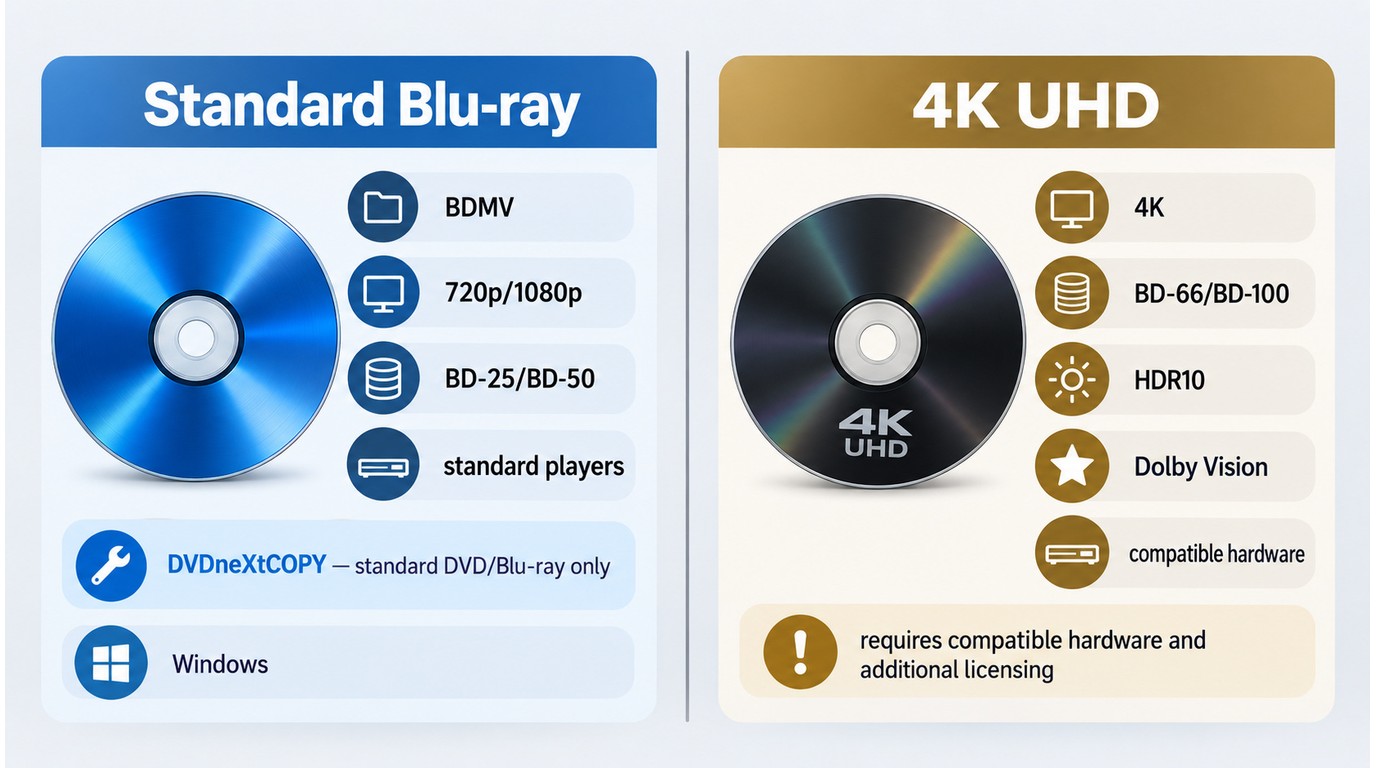
Standard Blu-ray authoring creates a BDMV project for BD-25 or BD-50 media, commonly at 1080p. 4K UHD authoring is a separate production process involving BD-66 or BD-100 capacity, HDR metadata, compatible hardware, and additional licensing.
- Standard Blu-ray: Best for 720p/1080p home videos, portfolios, small client deliveries, menus, chapters, and offline playback on standard Blu-ray players.
- 4K UHD: Best for a 4K master that requires HDR10 or Dolby Vision handling and a delivery chain designed for UHD media.
- Not ideal for UHD: A standard Blu-ray menu creator that lists BD-25/BD-50 and 1080p output cannot turn that specification into BD-66/BD-100 UHD authoring.
DVDneXtCOPY Blu-ray Creator belongs to the standard Blu-ray side: Windows, 720p/1080p, and BD-5/9/25/50 output. A UHD project needs different authoring software, compatible media and hardware, and the required licenses.
Compatibility and Disc Output Checklist
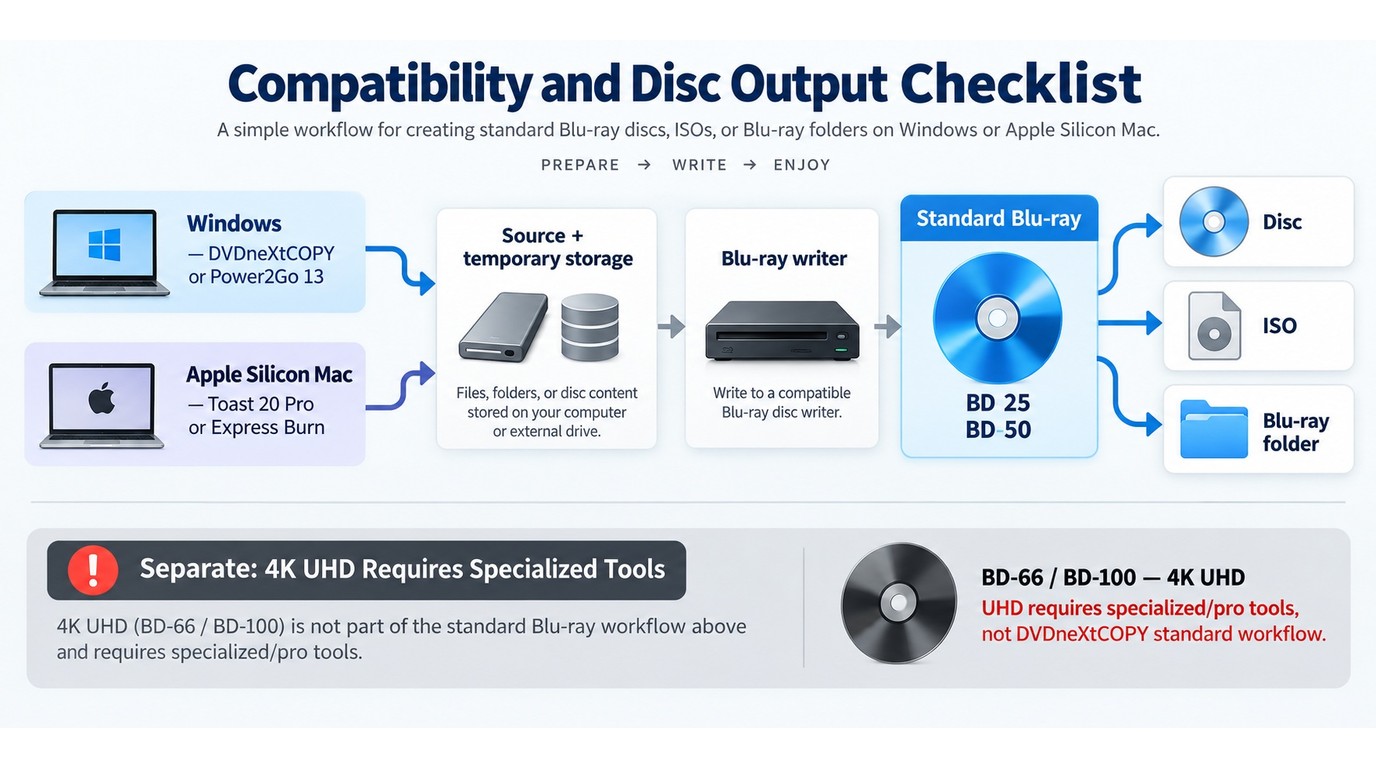
Check the computer, storage, optical drive, and output target before loading a full project. A short source clip is enough to expose an OS mismatch, missing writer, wrong disc capacity, or unavailable ISO option.
- Windows 11: DVDneXtCOPY explicitly supports Windows 11/10/8.1/8/7; Power2Go 13 and Blu-Disc Studio are also Windows entries.
- Apple Silicon Macs: Toast 20 lists Apple Silicon and macOS Sonoma support. Match other Mac software to its named architecture and macOS version.
- Intel Macs: Confirm that the installed macOS release remains in the application's system requirements before an operating-system update.
- RAM and storage: Reserve space for the source, encoded output, and temporary project files. Longer projects need more working space.
- Optical drive: Disc output requires an external or internal Blu-ray writer and blank media that match BD-25, BD-50, BD-66, or BD-100.
- ISO or folder output: Use an ISO image or Blu-ray folder to inspect the structure when a compatible writer is not attached.
My final check is playback and navigation: open the finished structure or disc, select each chapter, switch the intended audio and subtitle tracks, and confirm that every menu button reaches the correct title.
FAQs
Yes. Free Blu-ray authoring software can serve a basic standard-disc project, especially when you need simple menus and one output. Paid consumer software becomes more useful when you need guided menu editing, preview, chapter control, current support, or repeat client work.
No. A standard BDMV authoring product does not become 4K UHD software because it accepts a 4K source. UHD projects use BD-66 or BD-100 media and require software, hardware, metadata handling, and licensing designed for HDR10 or Dolby Vision delivery.
Match the exact operating-system version and processor architecture, then check storage and the optical drive. Windows 11 support does not imply macOS support, and a generic Mac label does not establish native Apple Silicon operation.
The Bottom Line
For standard personal Blu-ray projects, choose by OS and output first: DVDneXtCOPY on Windows, Toast or Express Burn on supported Macs, and Blu-Disc Studio for professional BD-J delivery. UHD projects need a separate authoring and licensing chain.
I would use DVDneXtCOPY when I need standard Windows discs, ISO or folder output, and visible menu and track controls. On Mac, Toast or Express Burn should be matched to the published system line. Replication and HDR masters belong in professional software.
 Steven VanceSep 17, 2026
How to Rip Blu-ray on Mac in 2026: 4 Workflows, 5 Methods
![How to Rip 3D Blu Ray: Pick MVC or SBS Before You Start [2026]](https://images.dvdnextcopy.com/2026/09/15/OCieIQbnp92l67jxKZzrGV_sFMToZiaa/feature_cover.jpg) Steven VanceSep 16, 2026
Steven VanceSep 16, 2026How to Rip 3D Blu Ray: Pick MVC or SBS Before You Start [2026]
 Steven VanceSep 15, 2026
Convert BDMV to MP4 on Windows or Mac: Choose the Right Method
 Luna MillerSep 15, 2026
How to Convert BDMV to MKV in 2026: Folder, Remux, or Re-Encode?
 Luna MillerSep 8, 2026
Best Free Blu-ray Copy Software in 2026: Reviews & How-to Guide
 Luna MillerSep 8, 2026
7 Best Free Blu-ray Ripper Software in 2026: Reviews & How to Rip Blu-ray