 DVDneXtCOPY Blu-ray Creator
How to Burn a Blu-ray Disc in 2026: Video, ISO/BDMV, and Data Methods

Summary: To burn a Blu-ray, use DVDneXtCOPY Blu-ray Creator when MP4, MKV, or other videos still need Blu-ray authoring, DVDneXtCOPY Blu-ray Copy or ImgBurn for a prepared ISO or BDMV structure, and File Explorer for an ordinary data disc. The correct method depends on whether you are building a playable movie disc, writing an existing Blu-ray structure, or simply storing files.
Table of Contents
When I prepare a Blu-ray project, the first thing I look at is what I am starting with. A few finished videos, a saved Blu-ray image, and a folder of ordinary files can all end up on a BD-R, but the work before the burn is quite different. That difference matters when I want the finished disc to behave like a movie disc instead of simply storing files.
In this guide, I'll go through four different ways for burning Blu-ray projects, including video authoring, prepared Blu-ray images and folders, and ordinary data. I'll also show where disc size, menu setup, output choice, and final verification matter before the disc is considered finished.
What You Need to Burn a Blu-ray Disc
- A Blu-ray writer: Use a drive that supports writing to BD-R or BD-RE. A BD-ROM drive can read Blu-ray discs but cannot burn blank media.
- Compatible blank media: Choose BD-R for write-once projects or BD-RE when you want to erase and reuse the disc. BD-25 and BD-50 are the most common capacities, so make sure the disc is large enough for the finished project.
- Enough local storage and suitable Blu-ray burning software: Blu-ray authoring may require temporary disk space while video is encoded and the disc structure is created. The software you need depends on whether you are creating Blu-ray Video, writing an existing ISO/BDMV structure, or simply storing files as data.
How to Burn a Blu-ray: Choose the Right Method
The main difference is not simply which program you use. It is whether the source still needs to be authored, already contains a Blu-ray structure, or only needs to be stored as ordinary files.
| Comparison | DVDneXtCOPY Blu-ray Creator | DVDneXtCOPY Blu-ray Copy | ImgBurn | Windows Built-in Tools |
|---|---|---|---|---|
| Best input | MP4, MKV, MOV, AVI and other videos | Prepared Blu-ray ISO or folder | ISO, authored BDMV, ordinary files | Ordinary files; ISO through Disc Image Burner |
| Create playable Blu-ray Video from video files | Yes | No | No | No |
| Write an existing Blu-ray ISO | No | Yes | Yes | Yes, through Disc Image Burner |
| Write an authored BDMV folder | No | Yes | Yes | Not the recommended Blu-ray Video workflow |
| Create a data Blu-ray | No | No | Yes | Yes |
| Create or edit a menu | Yes | No | No | No |
| Best for | Authoring video into a movie disc | Writing an already prepared Blu-ray structure | Prepared ISO, BDMV, and data writing | Simple file storage without third-party software |
Method 1: How to Burn Videos to a Playable Blu-ray with DVDneXtCOPY Blu-ray Creator
DVDneXtCOPY Blu-ray Creator can burn MP4, MKV, MOV, AVI, and other videos into a Blu-ray Video structure. Multiple videos can become separate titles behind a menu, with chapters for navigation. Audio and subtitle controls let you choose the tracks needed for playback, while Preview lets you check the menu and title layout before output. The finished project can be burned to Blu-ray or saved as an ISO or Blu-ray folder.
When several videos need to share one disc, I usually spend more time on title order and navigation than on decorative menu effects. A clear menu makes the finished Blu-ray easier to use from a TV, and saving the authored project as an ISO is useful when I expect to burn another physical copy later. DVDneXtCOPY currently provides a 30-day trial, with three Blu-ray creations available through Blu-ray Creator during the trial period.
Step 1: Add the Videos
Open DVDneXtCOPY and select Creator > Blu-ray Creator. Click Add or drag the source videos into the main window.

Step 2: Set the Blu-ray Size and Tracks
Open Advanced Settings and select an output size that matches the target media, such as BD-25 or BD-50. Then choose the audio and subtitle tracks you want to include.

Step 3: Create and Preview the Blu-ray Menu
Open Menu Settings. Choose a template or No Menu, then edit the title text, background, thumbnails, and navigation where needed. Use Preview to check the title order and menu navigation before writing the disc.

Step 4: Select the Output and Start to Burn Your Blu-ray Disc
Insert a blank Blu-ray and select the Blu-ray writer under Save to. Choose the ISO or folder option instead when you want a file-based master. Click Start to create the project.

After the disc is finished, eject and reinsert it, then test it in the device where it will actually be used. Check that the menu opens correctly, each intended title starts and ends normally, chapter navigation works, and the selected audio and subtitle tracks are available.
Method 2: How to Burn a Prepared Blu-ray ISO or Folder with DVDneXtCOPY Blu-ray Copy
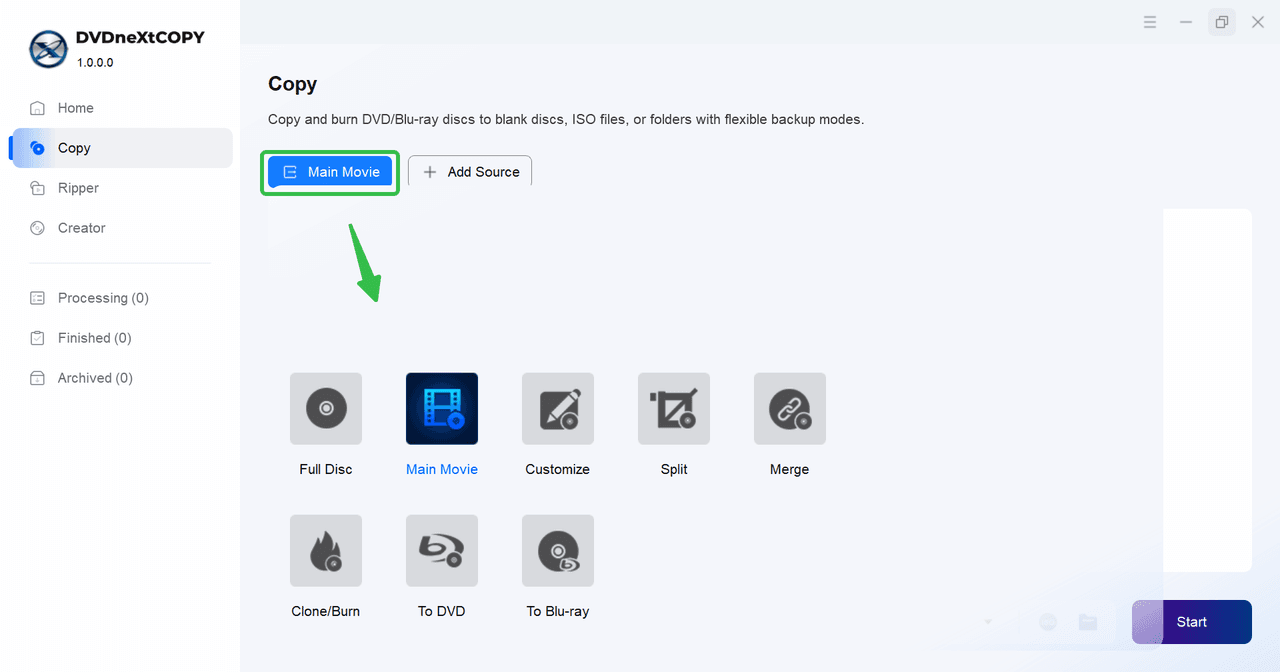
DVDneXtCOPY Blu-ray Copy can load an existing protected Blu-ray ISO image or folder and write it to blank Blu-ray media. Because it works with an already authored Blu-ray structure, it is intended for copying or burning an existing project rather than rebuilding menus, titles, and navigation from individual source videos. It provides six copy modes: Full Disc, Main Movie, Clone/Burn, Merge, Customize, and Blu-ray to DVD.
For an existing Blu-ray ISO or folder, Clone/Burn and Full Disc are the two most relevant modes. Clone/Burn is suitable when the prepared source can be written back at its existing size, while Full Disc is more useful when you want to retain the complete Blu-ray structure but may need to adjust the output to the target disc capacity. Since the source is already authored, there is no need to rebuild the project in Blu-ray Creator before burning.
Step 1: Load the Blu-ray ISO or Folder
Open DVDneXtCOPY and select Blu-ray Copy. Click Add Source, use the + button, or drag the Blu-ray ISO or folder into the interface.
Step 2: Choose the Copy Mode and Target Size
Use Clone/Burn when the prepared source can be written as a 1:1 copy to compatible target media. If the source and blank disc sizes differ or the project needs another output size, choose a mode such as Full Disc and configure the available output settings before burning.
Step 3: Select the Blu-ray Writer
Insert a blank BD-R or BD-RE. Select the Blu-ray writer as the destination instead of choosing ISO or folder output.
Step 4: Start Burning the Blu-ray Disc
Review the source, copy mode, output size, and destination, then click Start.
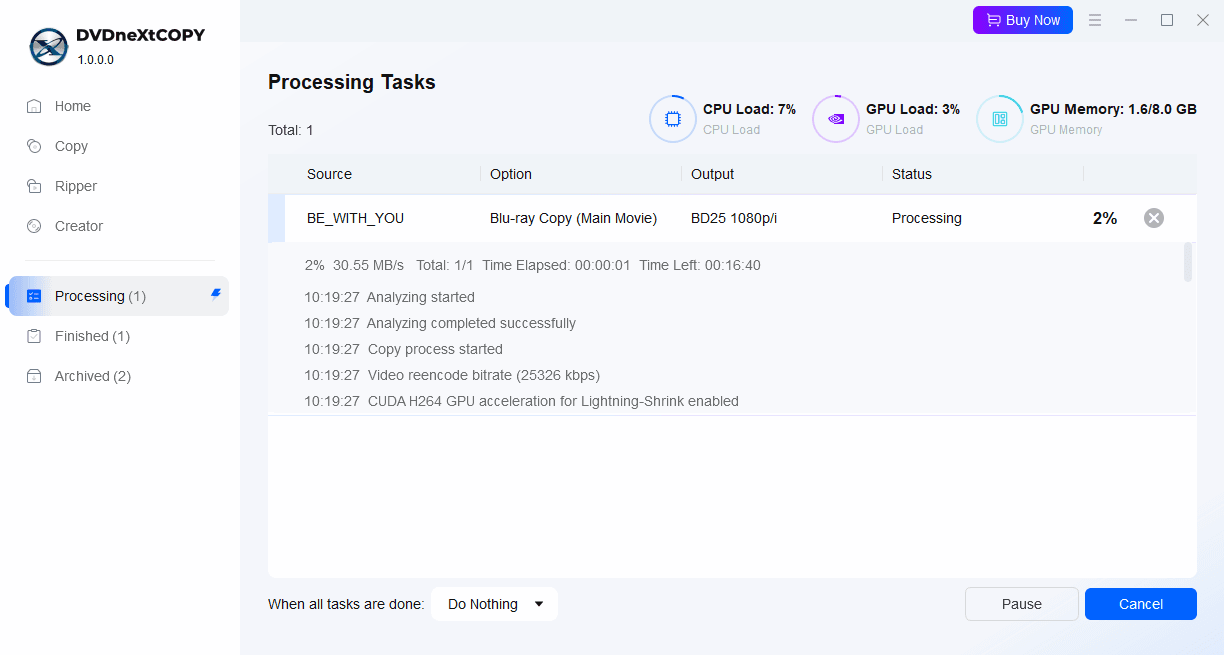
Method 3: How to Burn a Blu-ray ISO or BDMV Folder with ImgBurn
ImgBurn writes existing Blu-ray images and prepared folders rather than authoring ordinary video files into Blu-ray Video. Use Write mode for an ISO and Build mode when you already have an authored BDMV/CERTIFICATE structure. It cannot replace Blu-ray authoring software when the starting point is an ordinary MP4 or MKV.
ImgBurn makes the most sense after the authoring work is already finished. Its Write and Build modes keep image burning and folder burning clearly separated, which is one reason I still find it practical for a prepared ISO or BDMV project. The trade-off is age: ImgBurn is legacy Windows software, and its current version remains 2.5.8.0, released in June 2013.
Step 1: Open ImgBurn and Insert the Disc
Insert a blank BD-R or BD-RE and launch ImgBurn.
Step 2: Choose Write or Build
For an ISO, choose Write image file to disc. For an authored Blu-ray folder, choose Write files/folders to disc.
Step 3: Add the ISO or BDMV Structure
For an ISO, select the image file. For an authored folder, add the BDMV and CERTIFICATE folders and select the Blu-ray writer. Use UDF 2.50 for a prepared Blu-ray Video folder structure.

Step 4: Burn, Verify, and Test the Disc
Start the Write or Build job. Enable Verify if you want ImgBurn to read the written data after burning and compare it with the source.
Method 4: How to Burn Files to a Data Blu-ray with Windows File Explorer
Windows File Explorer can burn photos, documents, MP4 videos, ZIP archives, and other ordinary files to a data Blu-ray. The files remain in their original computer formats; File Explorer does not create Blu-ray Video menus or movie-disc navigation.
A data Blu-ray is mainly a storage disc, so it works best when the files need to be archived, transferred, or reopened on a computer. The main limitation is playback compatibility: a standalone Blu-ray player may support only certain containers and codecs stored as ordinary files. If the disc is intended to behave like a conventional movie Blu-ray, the videos should be authored into Blu-ray Video instead of being copied to BD-R as loose files.
Step 1: Insert the Blank Blu-ray
Insert a BD-R or BD-RE into a compatible Blu-ray writer, then open the optical drive in File Explorer.
Step 2: Choose the Burning Mode
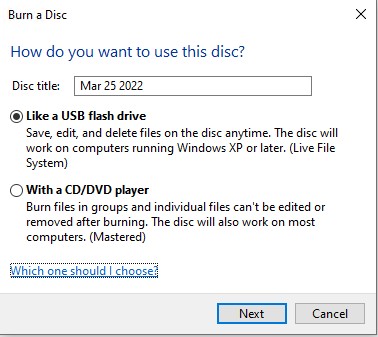
Enter a disc title in the Burn a Disc window. Choose Like a USB flash drive for Live File System use, or With a CD/DVD player for a mastered disc.
Step 3: Add the Files
Drag the files and folders into the disc window. For a mastered disc, Windows stages the selected files before the final write.
Step 4: Burn the Blu-ray Data Disc
For a mastered disc, click Burn to disc and follow the Windows prompts. After the process finishes, reopen the disc and test several files directly from the Blu-ray to confirm that the written data can be read.
FAQs
Yes. Windows includes Windows Disc Image Burner, which can write an ISO image to Blu-ray when a compatible Blu-ray writer and suitable blank disc are available. This is separate from File Explorer's ordinary data-disc workflow.
The disc structure is often the first thing to check. A BD-R containing ordinary MP4 or MKV files is a data disc, not automatically a Blu-ray Video disc. A computer can open many of those files directly, while a standalone player may require an authored Blu-ray Video structure or support only certain file formats and codecs on data discs.
No. A 4K source file alone does not turn an ordinary Blu-ray project into Ultra HD Blu-ray. Ultra HD Blu-ray is a separate disc specification with requirements beyond the source video's resolution.
Blu-ray authoring and physical disc writing are separate stages. MP4 or MKV sources may need encoding before the Blu-ray structure is created, so video duration, codec, output settings, and computer hardware affect preparation time. An existing ISO or BDMV structure skips video authoring; the remaining write time depends mainly on the amount of data, writer, blank media, and selected write speed.
Conclusion
Before burning, I first check whether the Blu-ray still needs to be authored or is already prepared. This avoids treating a data disc as Blu-ray Video or rebuilding an ISO that already contains the required disc structure.
For MP4, MKV, MOV, or AVI files that need to become a playable Blu-ray movie disc, I use DVDneXtCOPY Blu-ray Creator. For an existing Blu-ray ISO or folder, DVDneXtCOPY Blu-ray Copy is more appropriate, while ImgBurn remains a free option for writing a prepared ISO or BDMV structure. For simple file storage, Windows File Explorer is enough to burn a data Blu-ray.
 Steven VanceSep 17, 2026
How to Rip Blu-ray on Mac in 2026: 4 Workflows, 5 Methods
![How to Rip 3D Blu Ray: Pick MVC or SBS Before You Start [2026]](https://images.dvdnextcopy.com/2026/09/15/OCieIQbnp92l67jxKZzrGV_sFMToZiaa/feature_cover.jpg) Steven VanceSep 16, 2026
Steven VanceSep 16, 2026How to Rip 3D Blu Ray: Pick MVC or SBS Before You Start [2026]
 Steven VanceSep 15, 2026
Convert BDMV to MP4 on Windows or Mac: Choose the Right Method
 Luna MillerSep 15, 2026
How to Convert BDMV to MKV in 2026: Folder, Remux, or Re-Encode?
 Luna MillerSep 15, 2026
Blu-ray Authoring Software for Windows and Mac: 2026 Picks by Project
 Luna MillerSep 8, 2026
Best Free Blu-ray Copy Software in 2026: Reviews & How-to Guide