 DVDneXtCOPY DVD Ripper
How to Convert ISO to MP4: 3 Tested Methods for DVD ISO Files [2026]

Summary: A DVD or Blu-ray video ISO can be converted to MP4 by selecting the correct movie or episode and encoding that title. On Windows, DVDneXtCOPY provides a direct ISO to MP4 workflow; HandBrake suits readable ISO files, MakeMKV + HandBrake gives you more control over source tracks before compression, and an online converter is practical mainly for small, simple ISO files. A normal MP4 does not preserve the complete disc menu and structure.
Table of Contents
Before I convert ISO to MP4, I first check what the image actually contains. A DVD or Blu-ray video ISO can hold a movie, episodes, alternate cuts, commentary tracks, subtitles, chapters, menus, and extras. A software installer or ordinary data ISO is different: if it does not contain playable video, it cannot simply be turned into an MP4.
The next decision is what I want to keep. MP4 is convenient for playback on phones, TVs, tablets, media servers, and computers, but it normally represents selected video titles rather than the complete disc image. That distinction affects which converter makes sense and which audio, subtitle, and chapter options should be checked before encoding.
Which Method Should You Use to Convert ISO to MP4?
There is no need to divide the choices into free versus paid workflows. I would choose based on whether the ISO opens correctly, which operating system I am using, and how much of the original title and track structure I want to keep.
| Method | OS | ISO Handling | Best For | Main Tradeoff |
|---|---|---|---|---|
| DVDneXtCOPY DVD Ripper | Windows | Protected ISO import | Direct DVD ISO to MP4 workflow | Paid software with free trial |
| HandBrake | Windows / Mac / Linux | Readable DVD or Blu-ray ISO | Encoding control | Video is re-encoded |
| MakeMKV + HandBrake | Windows / Mac / Linux | MakeMKV opens ISO first | Preserving source tracks | Two stages and extra storage |
| Online Converter | Browser | ISO upload required | Small, simple ISO files | Limited title and track control |
How to Convert ISO to MP4 with DVDneXtCOPY DVD Ripper
If you want to convert a DVD ISO to MP4 on Windows without creating an intermediate file, DVDneXtCOPY DVD Ripper can do it directly. DVDneXtCOPY DVD Ripper is a Windows desktop application that can load protected DVD discs, ISO files, or DVD folders and converts selected titles to formats such as MP4 and MKV. It supports H.264 and H.265, audio and subtitle selection, batch processing, GPU acceleration where available, and Passthrough profiles that retain the original streams without re-encoding.
I would start with DVDneXtCOPY when an ISO contains several titles or when I need to batch-convert multiple DVD ISOs. Keeping source analysis and output configuration in one interface is particularly useful for movie DVDs that contain alternate cuts, commentary tracks, multiple subtitle languages, or bonus titles.
Step 1: Add the ISO and Select the Correct Title
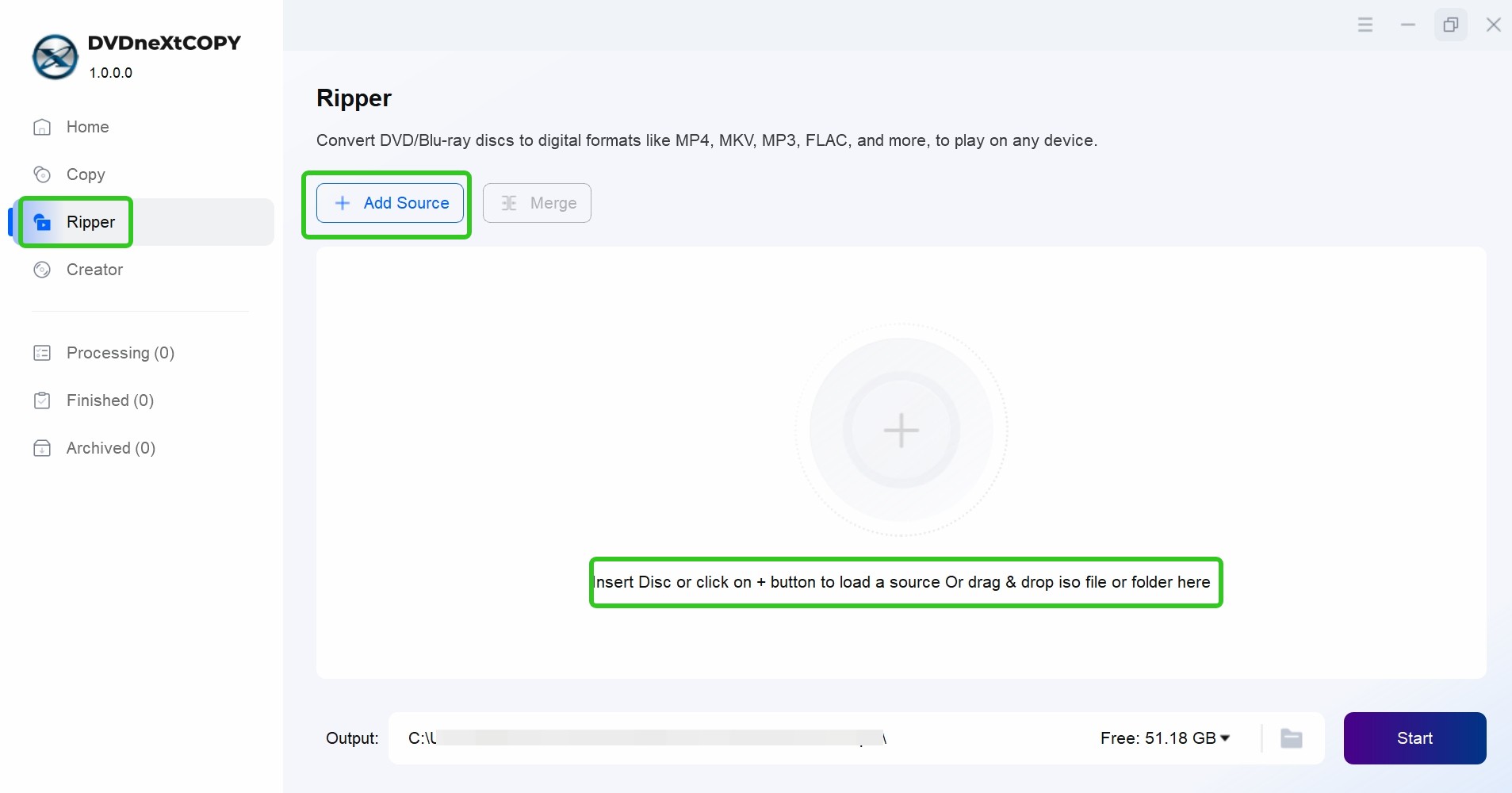
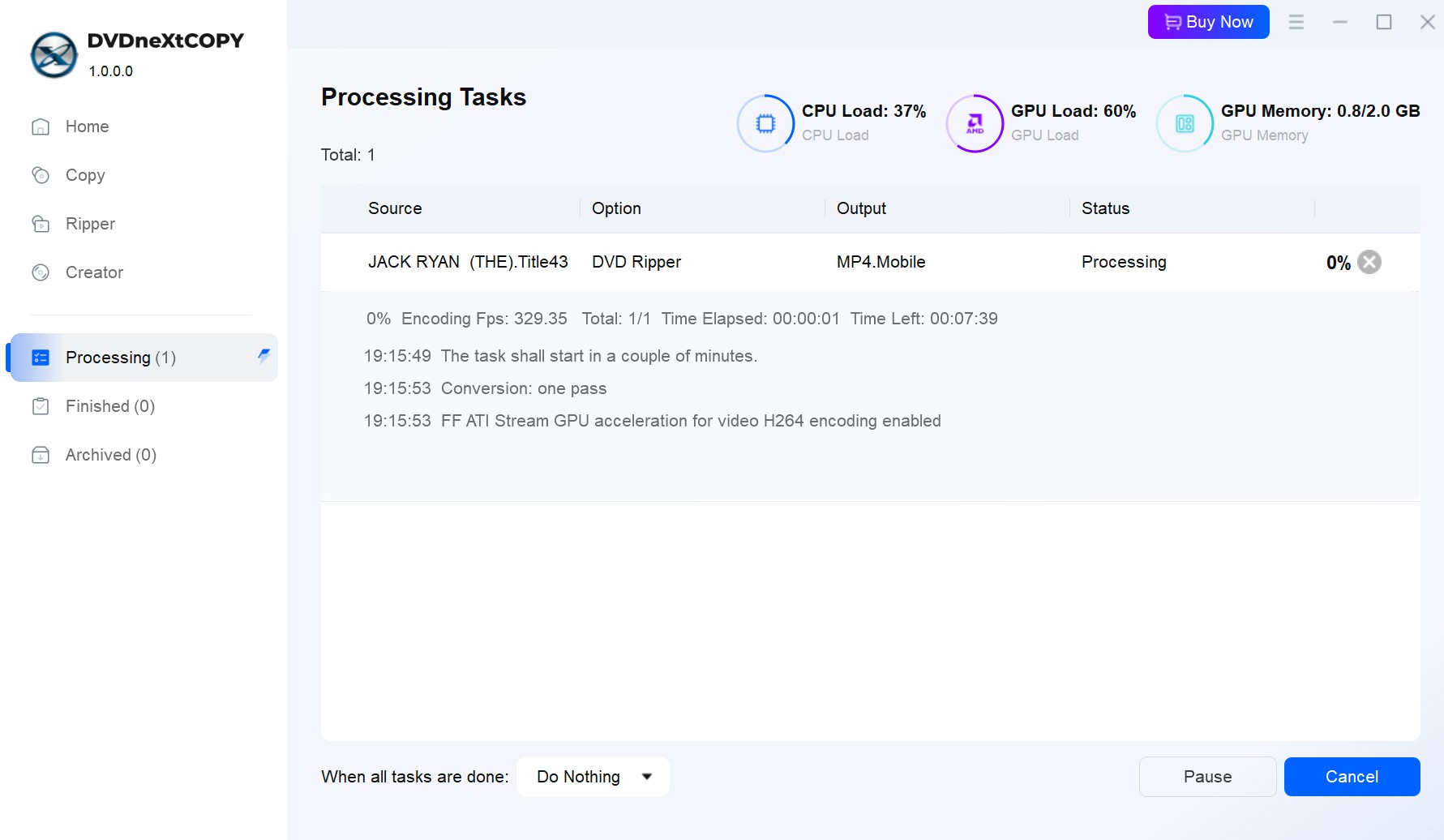
Open DVDneXtCOPY, switch to the Ripper module, and click +Add Source to select the ISO. You can also drag the image file directly into the main interface.
Step 2: Choose MP4, Audio, Subtitles, and Output Settings
Select the title you want and review its chapter range, audio tracks, and subtitles. Keep the main language and any commentary or subtitle track you expect to use later rather than carrying every available track into the output.
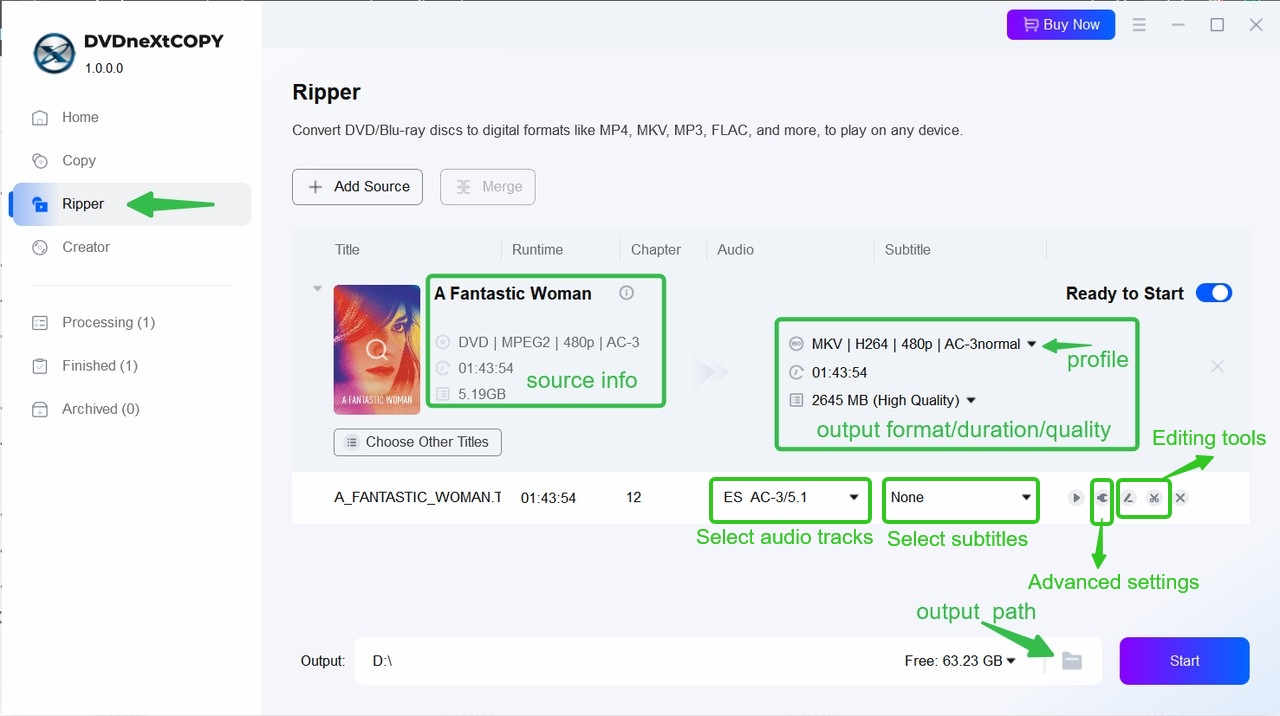
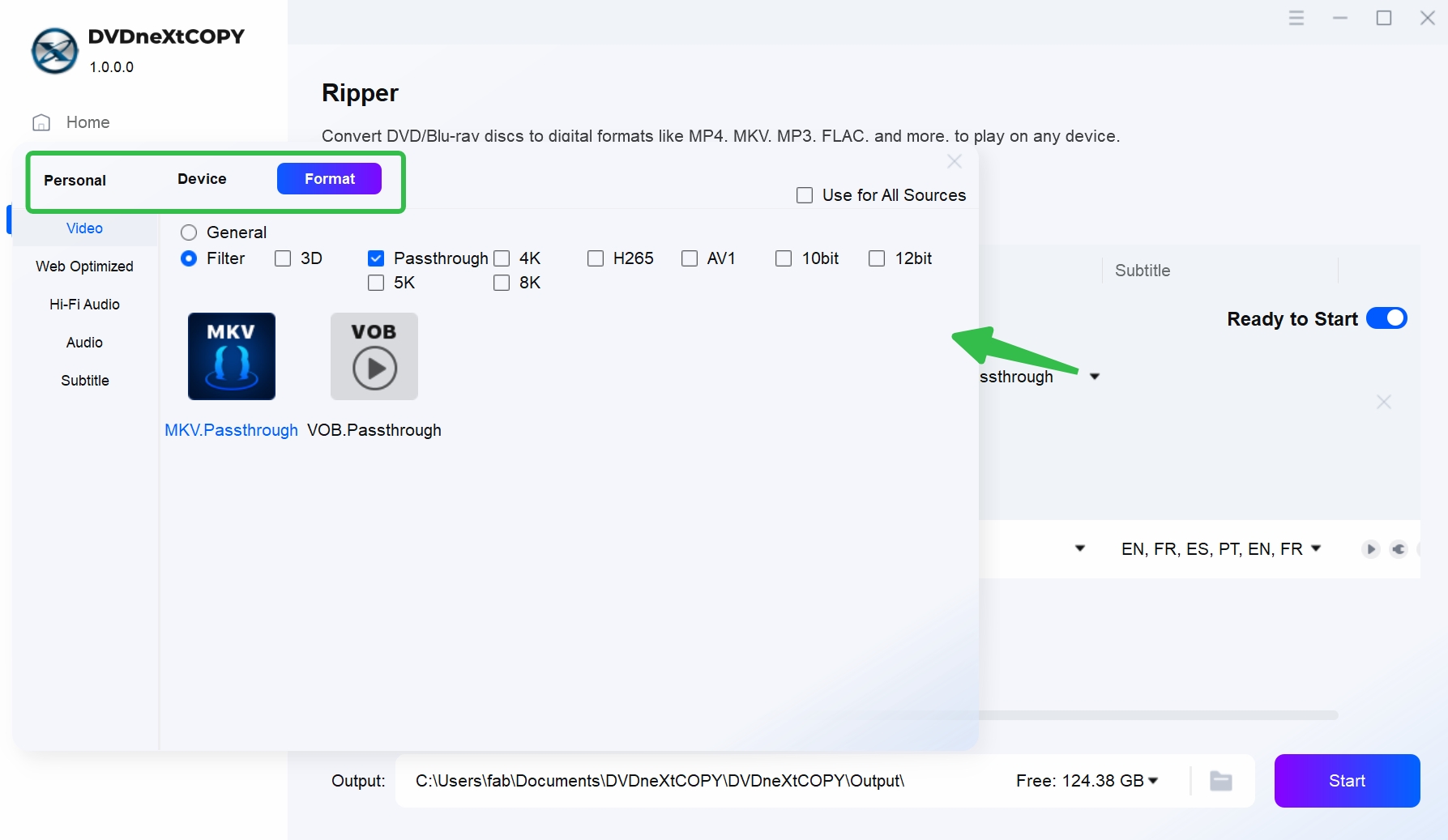
Choose MP4 as the output format. H.264 is a practical default when broad playback compatibility matters, while H.265 is more useful when the intended devices support it and reducing storage is a priority. Keep the resolution appropriate to the source instead of automatically enlarging a DVD image to 1080p or 4K.
Step 3: Convert the ISO to MP4
Choose the destination folder, give the file a useful name, and click Start. If the ISO contains several episodes or separate movie titles, convert and name them individually so that the finished files are easier to organize.
How to Convert ISO to MP4 with HandBrake
HandBrake can convert a readable ISO to MP4 without first extracting individual VOB or M2TS files. It can open many DVD and Blu-ray ISO sources and gives you direct control over the selected title, MP4 container, H.264 or H.265 encoder, video quality, audio tracks, subtitles, chapters, filters, and output dimensions.
I would use HandBrake when the ISO already opens correctly and the final encode matters more than disc handling. It gives more transparent control over quality and file size, but it is a video transcoder rather than a built-in copy-protection tool. If HandBrake cannot access the source, changing the MP4 preset will not solve that source-reading problem.
Step 1: Open the ISO and Choose the Correct Title
Launch HandBrake, select Open Source, and choose the ISO. Let the scan finish before changing the output settings.
Use the Title menu, duration, chapter count, and Preview feature to identify the movie or episode you want. A single ISO can contain trailers, extras, episodes, or alternate cuts, so choosing the correct title is more important than immediately selecting an encoding preset.
Step 2: Choose MP4, Video, Audio, and Subtitle Settings
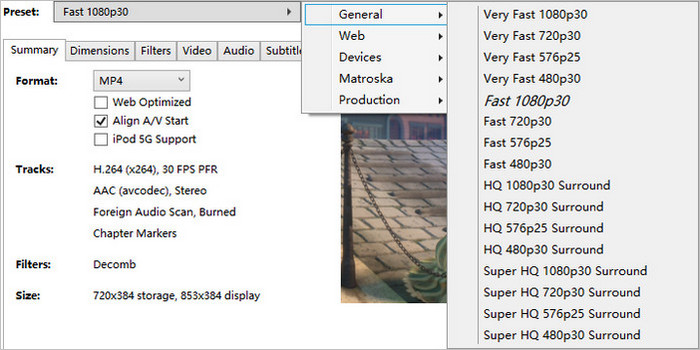
Select MP4 as the container. The appropriate preset depends on the source: a DVD ISO normally contains standard-definition material, while a Blu-ray ISO can contain HD video. Match the output to the source and your playback needs rather than applying one resolution to every ISO.

Step 3: Preview, Encode, and Verify the MP4
Use Preview to check a short sample before encoding the entire title. Cropping, interlacing, subtitle placement, and an incorrect audio choice are easier to fix before a full movie has been processed. Set the destination and start the encode.
How to Convert ISO to MP4 with MakeMKV and HandBrake
MakeMKV with HandBrake is useful when you want to convert ISO to MP4 while preserving more source tracks before compression. MakeMKV opens the disc image first and creates an MKV that can retain multiple video or audio tracks, subtitles, chapters, and track metadata without re-encoding the source video. HandBrake then turns the verified MKV into the final MP4.
I prefer this approach when an ISO contains episodes, commentary, several subtitle languages, or content I may want to encode again later. The tradeoff is not another full round of video compression at the MakeMKV stage; it is the extra application, a potentially large intermediate MKV, more storage, and one additional file-management step.
Step 1: Open the ISO in MakeMKV and Select the Titles
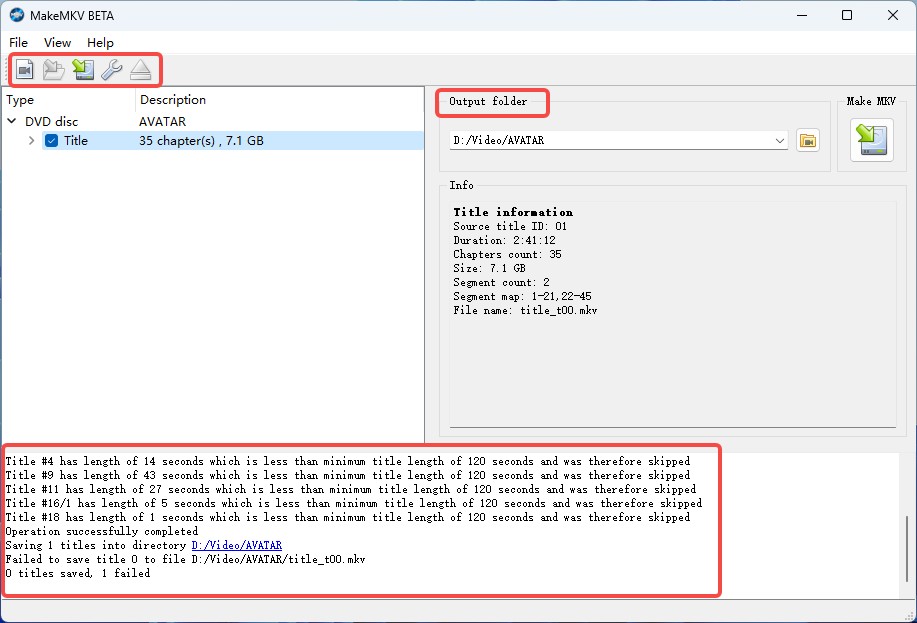
Open MakeMKV and use File > Open File to choose the ISO. After MakeMKV analyzes the image, inspect the available titles, chapters, audio tracks, and subtitles.
Select only the movie, episodes, or extras you intend to keep. For a multi-title image, compare duration and chapter structure instead of exporting everything automatically.
Step 2: Save and Check the MKV
Choose an output folder and create the MKV. Because the selected source video is not being compressed into a smaller codec at this point, the resulting file may remain large.
Play the MKV before moving to HandBrake. Check the running time, audio, subtitles, chapters, and several points in the video. If the wrong episode or track was selected, correct it at this stage instead of encoding the wrong MKV into MP4.
Step 3: Convert the MKV to MP4 with HandBrake
Open the verified MKV in HandBrake, select MP4, and choose the video settings according to the original resolution and your target devices. Review audio, subtitles, and chapter markers once more before starting the encode.
After conversion, compare the MP4 with the MKV. If the smaller MP4 contains everything you need and plays correctly, you can decide whether the larger MKV is still useful as a reusable source file.
Can You Convert ISO to MP4 Online?
Yes. Some browser-based services let you convert ISO to MP4 online by uploading the ISO, selecting MP4 as the target, running the conversion, and downloading the finished video. For example, file-converter-online currently provides a dedicated ISO to MP4 workflow and can accept local files as well as supported cloud imports.
I would reserve an online converter for a small, straightforward ISO. A full movie image can be several gigabytes, and uploading it is only the first part of the process. More importantly, browser converters usually give you less control over multiple titles, chapter ranges, commentary tracks, and subtitles than the desktop workflows above.
Step 1: Upload the ISO
Select the ISO from local storage or a supported cloud service. Remember that the entire source must be transferred to the service before remote processing can begin.
Step 2: Choose MP4 and Start the Conversion
Select MP4 as the target format and begin processing. For a simple video ISO, this removes much of the local software setup, but it also gives you fewer opportunities to inspect the title and track structure before conversion.
Step 3: Download and Check the Result
Download the completed MP4 and immediately confirm the running time, picture, audio, and expected program. If the ISO contains several movies, episodes, alternate cuts, or important subtitle tracks, I would switch to a desktop converter rather than depend on automatic title selection.
What Do You Keep or Lose When Converting ISO to MP4?
An ISO and an MP4 are built for different jobs. An ISO can represent a complete optical-disc image, while an MP4 is normally a playback file created from one selected title. This is why an MP4 can be much easier to use without being a complete substitute for the original image.
| ISO Content | Typical MP4 Result |
|---|---|
| Main movie | Kept when the correct title is selected |
| Multiple movies or episodes | Usually converted into separate MP4 files |
| Audio tracks | Selected tracks can be kept |
| Commentary | Must be selected if you want it |
| Subtitles | Depends on subtitle type and output settings |
| Chapters | Can be retained by supported workflows |
| DVD or Blu-ray menu | Original interactive menu is not reproduced |
| Extras | Need to be selected and converted separately |
| Full disc structure | Not preserved in one normal MP4 |
If I want menus, all extras, and the complete authored disc structure, I keep the ISO. If I mainly want a movie or individual episodes that are easy to play, name, organize, and move between devices, MP4 is usually the more practical format.
Conclusion
On Windows, I would choose DVDneXtCOPY DVD Ripper when I want to import a DVD ISO, select the right title and tracks, and create MP4 in the same application. HandBrake is the cleaner choice when the ISO already opens correctly and I want more control over encoding quality, size, audio, subtitles, and chapters.
MakeMKV + HandBrake makes more sense when preserving and checking source tracks before compression is important. An online converter can be convenient for a small and simple ISO, but I would not choose it first for a large multi-title disc image.
Whichever method you use, do not delete the ISO just because the progress bar has reached 100 percent. Reopen the MP4, check the correct title and total duration, switch the audio and subtitles, test the chapters, and play the file on its intended device before deciding that the source is no longer needed.
FAQs
No. The ISO needs to contain playable video, such as a DVD or Blu-ray video structure. A software installer, operating-system image, game image, or ordinary data ISO cannot become an MP4 simply by changing its file format.
Not when the video is re-encoded in a typical MP4 workflow. Good encoder settings can keep visible changes small, but the video stream is still being compressed again. If retaining the original compressed streams matters more, keep the ISO or a suitable MKV source as well as the smaller MP4.
Usually not with the methods in this guide. DVDneXtCOPY can import a DVD ISO directly, HandBrake can open many readable DVD and Blu-ray ISO images, and MakeMKV can open supported ISO files. Other disc-image formats may need to be mounted before a converter can read them.
An ISO can contain the complete disc structure, multiple titles, extras, menus, audio tracks, and subtitles. An MP4 normally contains only the selected video and tracks, and its video is often compressed again, so the finished file can be considerably smaller.
![Top 8 Best MP4 to DVD Converters on Windows & Mac [2026 Tested]](https://images.dvdnextcopy.com/2026/09/17/I2v69nzxIF6Xn7iue3ZRMGJ5-Ls0SF_z/feature_cover.jpg) Luna MillerSep 21, 2026
Luna MillerSep 21, 2026Top 8 Best MP4 to DVD Converters on Windows & Mac [2026 Tested]
 Luna MillerSep 21, 2026
DVD Region Codes Explained: Region 1 and Playback Options
![How to Remove DVD Copy Protection: Software and Free Methods [2026]](https://c.dvdnextcopy.com/media/How_to_Remove_DVD_Copy_Protection_d24c38a790.png) Steven VanceSep 21, 2026
Steven VanceSep 21, 2026How to Remove DVD Copy Protection: Software and Free Methods [2026]
 Luna MillerSep 21, 2026
How to Rip a Copy-Protected DVD on Win & Mac: 6 Ways
 Steven VanceSep 18, 2026
Top MP4 to ISO Converter in 2026: DVD Authoring vs Online Tools
 Steven VanceSep 18, 2026
How to Digitize DVD Collection: 5 Ways in 2026