 DVDneXtCOPY DVD Ripper
2026 DVD Ripper for Windows 10/11: 5 Tools Compared for Compatibility and Output

Summary: On Windows 11, choose a DVD ripper by the source and output you need: DVDneXtCOPY handles DVD discs, folders, and ISO files with multiple output profiles; MakeMKV keeps selected DVD streams in MKV without re-encoding; HandBrake re-encodes readable DVD sources to MP4, MKV, or WebM; DVDFab HD Decrypter offers a more limited free Windows option; and VLC can cover occasional basic conversion. On Windows 10, check the software's current support status before installing it because Microsoft ended regular Windows 10 support in October 2025.
Table of Contents
A DVD drive appearing in File Explorer does not tell you whether a DVD ripper still supports your version of Windows. That matters more now that Windows 10 has reached the end of regular Microsoft support while Windows 11 remains the current Windows platform. Some DVD ripping programs still run on Windows 10, but current support varies by application.
This page focuses on DVD ripper Windows 10/11 compatibility, DVD and ISO input, output formats, track controls, and Windows-specific problems.
Use DVD ripping software only with discs you own or have permission to copy, and follow the applicable law where you live.
DVD Ripper for Windows 10/11: Compatibility at a Glance
Windows 11 is the cleaner starting point for current DVD ripping software. Windows 10 PCs can still run after Microsoft's October 14, 2025 end-of-support date, but software vendors now make their own decisions about whether to keep testing and supporting Windows 10. HandBrake shows the difference clearly: its current Windows release supports Windows 11 while Windows 10 is marked deprecated.
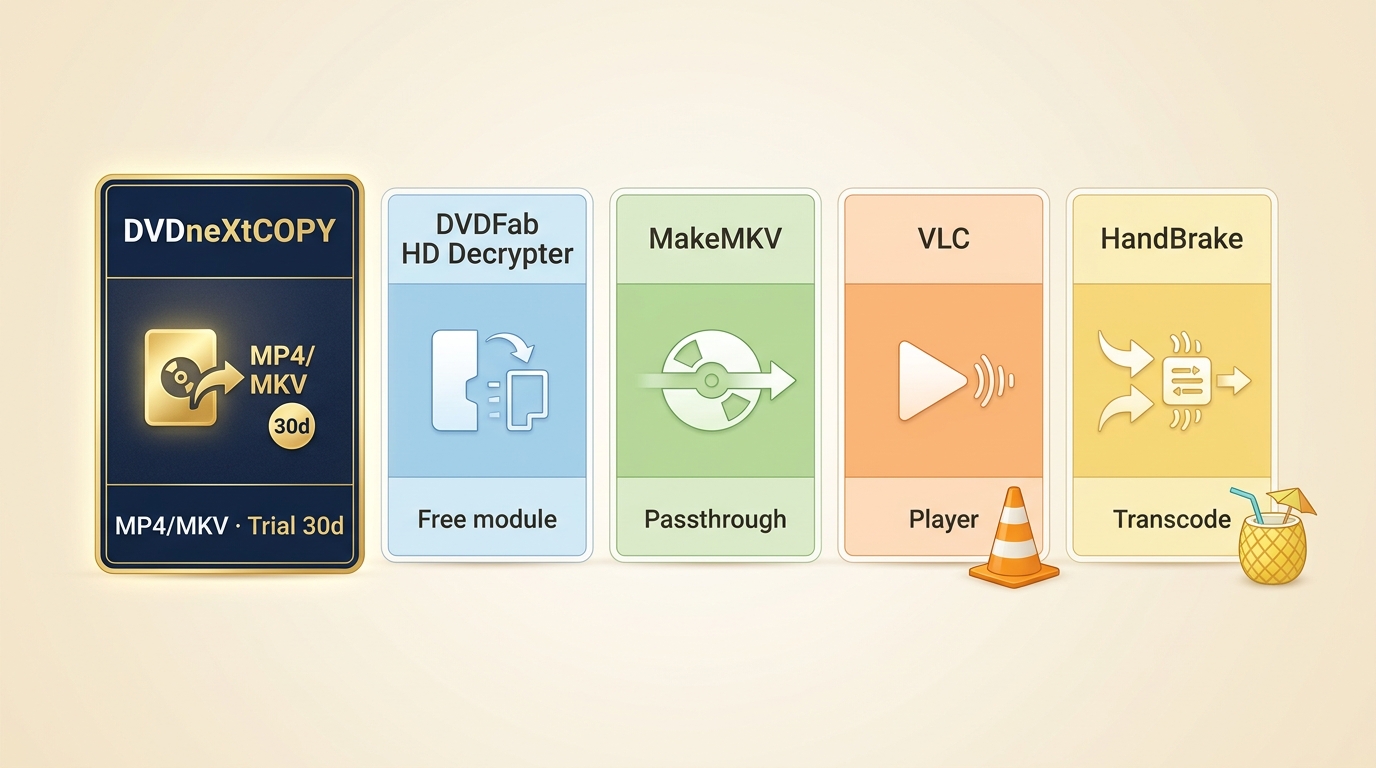
| DVD Ripper | Windows 11 | Windows 10 | License / Access | DVD Decryption | DVD Disc | Folder / ISO | Main Output |
|---|---|---|---|---|---|---|---|
| DVDneXtCOPY DVD Ripper | Yes | Yes | 30-day trial; up to 3 DVDs | Yes | Yes | DVD folder / ISO | MP4, MKV, audio, subtitle, and other profiles |
| DVDFab HD Decrypter | Yes | Yes, 64-bit | Free edition | Yes, but limited | Yes | Folder / ISO | MP4, MKV, folder / ISO in Copy mode |
| MakeMKV 1.18.4 | Yes | Yes | DVD functionality free | Yes, but limited | Yes | Disc-focused | MKV |
| HandBrake 1.11.2 | Supported | Deprecated | Free and open source | No | Readable DVD sources | Yes | MP4, MKV, WebM |
| VLC 3.0.23 | Yes | Yes | Free and open source | No | Yes | Media files / disc sources | Multiple containers through conversion |
My Windows DVD Ripping Setup
My Windows DVD-ripping desktop runs Windows 11 Pro with an AMD Ryzen 7 7700, Radeon RX 7800 XT 16GB, 32GB of DDR5 memory, and a Samsung 990 PRO 2TB NVMe SSD. I use an externally powered ASUS BW-16D1X-U optical drive for standard DVD and Blu-ray work, with a WD My Book 8TB drive for the media library.
For a finished DVD file, the progress bar is only the first check. I use MediaInfo to inspect the video stream, audio tracks, subtitles, and chapters, then open the file in VLC and check playback at the beginning, middle, and end. I also switch through the tracks I intended to keep before moving the file into long-term storage.
5 DVD Rippers for Windows 10/11
1. DVDneXtCOPY DVD Ripper - DVD, ISO, and Folder Conversion on Windows
DVDneXtCOPY DVD Ripper for Windows loads a physical protected DVD from the optical drive and can also open a DVD folder or ISO through +Add Source. After the source loads, you can switch titles, choose a chapter range, keep the required audio and subtitle tracks, and select an MP4, MKV, audio, or subtitle-oriented output. Advanced settings add video and audio codec controls as well as soft and hard subtitle modes.
The useful Windows distinction is the choice between passthrough-style output and re-encoding. A compatible passthrough profile avoids another video encode, while an encoded profile is the better route when you need a different codec or a smaller file.

2. DVDFab HD Decrypter - Limited Free DVD Ripping on Windows
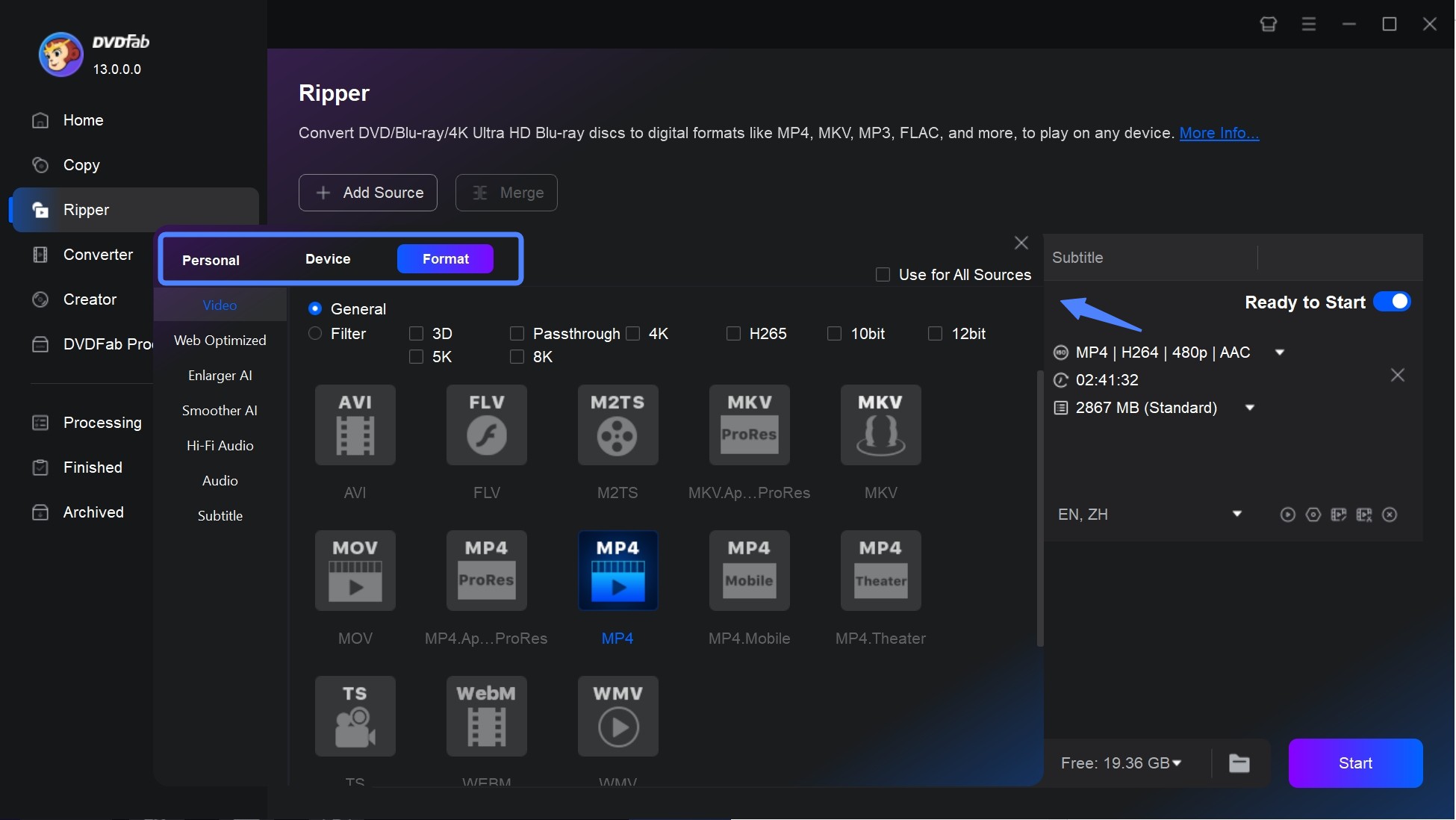
DVDFab HD Decrypter currently supports 64-bit Windows 11 and Windows 10. It can load a disc, folder, or ISO, and its free tools provide Full Disc and Main Movie copy modes alongside more restricted MP4 and MKV ripping options. Audio and subtitle tracks can be selected before output, so the free edition can cover a basic DVD-to-MP4 or MKV job when the available profiles match the intended file.
The Windows limitation is feature scope rather than installation. HD Decrypter has fewer ripping profiles and narrower disc coverage than the paid DVD Ripper. If MP4 or MKV already matches the required output, that may be enough; if you need broader format control, upgrade the free edition to advanced DVDFab DVD Ripper.
3. MakeMKV - MKV DVD Ripping on Windows
MakeMKV 1.18.4 runs on Windows and converts selected DVD titles into MKV without re-encoding the selected video and audio streams. Its MKV files can hold multiple video and audio tracks, subtitles, chapter information, and track metadata. DVD-opening functionality remains free, so a Windows user who already wants MKV does not need to choose a compression preset before saving the disc content.
That narrow output model is both the reason to use MakeMKV and its main tradeoff. It avoids an extra video encode and keeps selected tracks together, but it does not directly create a smaller MP4 tailored for a phone or another device. If MKV is already the destination, the simple title-and-track model works well; if MP4 is the target, another conversion step may be needed.

4. HandBrake - DVD Encoding on Windows 11
HandBrake 1.11.2 is a video transcoder for Windows rather than a passthrough video ripper. It creates MP4, MKV, or WebM output and always re-encodes the video stream, although supported audio formats can be passed through. Title and chapter selection, presets, audio tracks, subtitles, chapter markers, and queueing make it useful when the source can already be read and the goal is a newly encoded file.
Windows 11 is the cleaner match for the current HandBrake release. Windows 10 is marked deprecated, meaning the program may still work there but Windows 10-specific problems are no longer supported in the same way. HandBrake does not process copy-protected DVD sources on its own, so use it with DVD sources the program can already read.

5. VLC - Basic DVD Conversion on Windows
VLC 3.0.23 is primarily a media player, but its Windows version can open DVDs and expose DVD title, chapter, audio, and subtitle selectors. VLC also includes conversion and transcoding controls that can process media streams and save a converted file locally.
VLC makes the most sense when it is already installed and the DVD task is straightforward. Its conversion tools are general media functions rather than a dedicated DVD-library interface, so repeated title selection, track management, and consistent output settings need more manual attention than they do in specialist DVD software.

Windows DVD Ripper Feature Comparison
| Tool | Title Selection | Audio | Subtitles | Chapters | MP4 | MKV | Video Handling |
|---|---|---|---|---|---|---|---|
| DVDneXtCOPY | Yes | Select tracks | Select / soft / hard options | Select chapter range | Yes | Yes | Passthrough or re-encode |
| DVDFab HD Decrypter | Full Disc / Main Movie | Select tracks | Select tracks | Output-dependent | Yes | Yes | Copy, passthrough, and limited ripping profiles |
| MakeMKV | Yes | Keep or remove tracks | Keep or remove tracks | Preserves chapter data | No direct MP4 | Yes | Remuxes selected streams without re-encoding |
| HandBrake | Yes | Encode or supported passthrough | Soft / burn-in depending on format | Can retain existing markers | Yes | Yes | Video is re-encoded |
| VLC | DVD title selector | DVD audio selector | DVD subtitle selector | DVD chapter selector | Profile-dependent | Profile-dependent | General remux / transcode controls |
For Windows users, the output usually settles the choice faster than a generic ranking. DVDneXtCOPY is useful when DVD, folder, and ISO input need to feed several output profiles in one Windows application. MakeMKV is the simpler route when MKV without another video encode is the goal. HandBrake suits readable sources that need compression or a new codec on Windows 11. DVDFab HD Decrypter covers a narrower free Windows task, while VLC can handle an occasional basic conversion.
Rip and Check a DVD on Windows 10/11
Check the DVD Drive in Windows
Insert the DVD and confirm that Windows detects the optical drive before opening the ripper. In File Explorer, the drive should appear under This PC when Windows recognizes it. If the drive is missing there, reconnect an external USB drive, check its power supply if it uses one, and try a known-readable disc before changing video settings inside the ripping software.
Open the DVD and Select the Right Title
A DVD can contain more than one title. The longest title is often the main feature, but alternate cuts, episodes, extras, and similar program chains can make automatic selection unreliable. Check the runtime and preview the detected title when the program provides that option, then select the audio and subtitle tracks you want to keep.
For a DVD folder or ISO, use the program's source control instead of treating it like a physical disc. DVDneXtCOPY can add a DVD folder or ISO through +Add Source, while DVDFab also accepts folder and ISO input.
Choose the Output and Tracks
MP4 is usually the simpler choice when broad device playback matters and you only need the tracks supported by that output. MKV is useful when multiple audio or subtitle tracks and chapter information need to remain together in one file. MakeMKV is built around that second model, while HandBrake and DVDneXtCOPY provide more control when re-encoding, file size, or codec choice matters.
Before starting, check the selected title, chapter range, audio languages, commentary tracks, and subtitles. Removing a track is easy before conversion; discovering that it is missing after the disc has been put away means running the job again.
Reopen and Check the Finished File
A finished progress bar confirms that processing stopped. It does not confirm that the correct movie, audio, subtitles, and chapters made it into the file.
- Play the beginning, a point in the middle, and the end.
- Check the total runtime.
- Switch through each audio track you intended to keep.
- Turn the required subtitles on and off.
- Check chapter navigation when the output supports chapters.
- Give the file a clear name before moving it into the library.
VLC is useful for playback and track switching, while MediaInfo can show the streams and chapter data stored in the finished container. If something is missing, correct the source selection or track settings and create a fresh output from the DVD source.
Fix DVD Ripper Problems on Windows 10/11
Windows Does Not Detect the DVD Drive
Start outside the DVD ripper. If the optical drive is absent from File Explorer, reconnect the drive and test another disc. An externally powered drive should have its power connection checked separately from the USB data cable. If another DVD appears normally, inspect the original disc for dirt or damage. If no known-good DVD appears, the problem is closer to Windows, the drive, its connection, or its driver than to the ripper.
Windows Sees the Drive, but the Ripper Does Not See the DVD
If File Explorer shows the optical drive but the DVD ripper does not load the disc, reload the source or select the drive manually where the program allows it. VLC, for example, lets you select a disc device through Media > Open Disc, while DVDneXtCOPY normally detects an inserted disc after switching to the Ripper module.
If you already have a DVD folder or ISO, load that source through the software's file or ISO option instead of continuing to troubleshoot the optical drive. Windows compatibility and the ability to read a particular DVD are separate checks.
The Wrong Title, Audio, Subtitle, or Chapter Is Missing
Return to the source-selection screen and check the detected title before repeating the job. Compare its runtime with the content you meant to save and inspect the chapter range. For missing audio or subtitles, confirm that the track was selected before conversion and that the chosen container can store it in the form you expect.
After correcting the setting, create a fresh output from the DVD source and reopen it. The check is complete when the correct title plays and the audio, subtitles, and chapters you intended to keep are available.
FAQs About DVD Rippers for Windows 10/11
Does Windows 10 or Windows 11 have a built-in DVD ripper?
Windows Media Player can rip audio CDs, but Windows does not include a built-in tool dedicated to converting video DVDs into MP4 or MKV files. For video DVD conversion, use a DVD ripping or transcoding application that supports your Windows version.
ACan I still use DVD ripping software after Windows 10 support ended?
Yes. Windows 10 PCs still run after Microsoft's October 14, 2025 end-of-support date, but application support now varies by vendor. Check the current Windows requirements for the ripper you plan to install.
ACan I use an external USB DVD drive with a DVD ripper on Windows 11?
Yes, as long as Windows recognizes the optical drive and the ripping application can access it. Check that the drive appears under This PC before troubleshooting the DVD ripper itself.
ACan Windows 11 open a DVD ISO file before I convert it?
Windows 11 can mount an ISO so it appears as a virtual drive in File Explorer. For conversion, a DVD ripper that accepts ISO input can usually load the image directly without mounting it first.
AConclusion
Choose the tool by the file you need after the disc is done: MakeMKV for track-rich MKV files, HandBrake for compressed device-ready files, VLC for occasional readable home-made discs, and DVDneXtCOPY DVD Ripper when flexible Windows output control matters.
DVDneXtCOPY DVD Ripper is limited to Windows and is more than many readers need for a basic free conversion. I would choose it when I need to decide which audio tracks, subtitles, and local-file format to keep from a legally owned DVD. Whatever tool you use, reopen the result and check chapters, audio, subtitles, and playback before relying on it as your backup.
![Top 8 Best MP4 to DVD Converters on Windows & Mac [2026 Tested]](https://images.dvdnextcopy.com/2026/09/17/I2v69nzxIF6Xn7iue3ZRMGJ5-Ls0SF_z/feature_cover.jpg) Luna MillerSep 21, 2026
Luna MillerSep 21, 2026Top 8 Best MP4 to DVD Converters on Windows & Mac [2026 Tested]
 Luna MillerSep 21, 2026
DVD Region Codes Explained: Region 1 and Playback Options
![How to Remove DVD Copy Protection: Software and Free Methods [2026]](https://c.dvdnextcopy.com/media/How_to_Remove_DVD_Copy_Protection_d24c38a790.png) Steven VanceSep 21, 2026
Steven VanceSep 21, 2026How to Remove DVD Copy Protection: Software and Free Methods [2026]
 Luna MillerSep 21, 2026
How to Rip a Copy-Protected DVD on Win & Mac: 6 Ways
 Steven VanceSep 18, 2026
Top MP4 to ISO Converter in 2026: DVD Authoring vs Online Tools
 Steven VanceSep 18, 2026
How to Digitize DVD Collection: 5 Ways in 2026